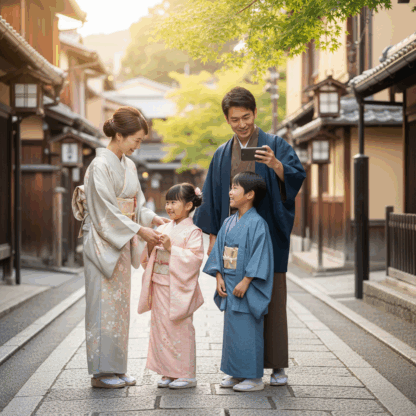
How to Capture the Best Kyoto Family Photos in Winter 2026

Winter transforms Kyoto into a contemplative landscape where traditional temples, historic gardens, and serene neighborhoods reveal their most intimate beauty. For families seeking to document their time together in one of Japan’s most culturally significant destinations, winter presents an extraordinary opportunity that surpasses other seasons in remarkable ways. The crisp air, golden morning light, sparse crowds, and unique seasonal aesthetics create photographic conditions that transform ordinary snapshots into genuinely beautiful family memories worthy of preservation and display.
This comprehensive guide explores the complete landscape of family photography in winter Kyoto—from identifying optimal photography locations and understanding seasonal lighting dynamics to coordinating professional photography services, styling family members in traditional kimono, and applying technical photography principles that elevate results. Whether you’re planning a three-day escape or an extended family vacation, understanding how to maximize winter Kyoto’s photographic potential transforms your visit into a documented experience that transcends typical tourist photography.
Why Winter is Perfect for Kyoto Family Photography
Winter represents a fundamentally different Kyoto than other seasons—one that reveals dimensions often obscured by crowds, foliage, and seasonal tourism patterns. Understanding why winter excels for family photography helps explain the strategic advantages of timing your 2026 family vacation during these months.
Seasonal Light and Golden Hour Advantage
Winter’s lower solar angle creates dramatically different lighting conditions than spring through fall. The sun never climbs as high in the sky, meaning morning and afternoon light approaches the horizon at oblique angles throughout the day. This extended golden hour period—roughly 8 AM to 4 PM during December through February—provides warm, directional light that flatters faces, creates dimensional shadows, and dramatically enhances the visual richness of architectural details, temple structures, and natural elements.
This extended golden hour means family photographers can accomplish superior results across much broader time windows than summer, when harsh overhead midday light creates unflattering shadows and washed-out colors. For families with young children whose schedules demand flexibility, winter’s generous lighting window provides greater scheduling freedom and more opportunities for genuinely beautiful photographs.
Crowd Reduction and Peaceful Atmosphere
Peak tourism season in Kyoto spans March through November, with particular density during spring cherry blossom season and autumn foliage periods. Winter, conversely, represents Kyoto’s quietest season—temples receive manageable visitor numbers, pathways feel peaceful rather than congested, and famous photography locations remain accessible without competing for positioning with dozens of other photographers.
This crowd reduction matters significantly for family photography. Rather than rushing through locations to make way for other visitors, families can linger, explore multiple angles, and allow children to relax into comfortable poses without pressure. The peaceful atmosphere naturally creates more authentic emotional expressions—children smile genuinely rather than exhaustedly, and families position themselves with genuine connection rather than performing for crowds.
Unique Seasonal Aesthetics
Winter reveals Kyoto’s skeletal beauty. Bare tree branches create intricate silhouettes against temples and sky, frost occasionally adorns foliage and stone structures with crystalline detail, and the bare landscape emphasizes architectural features often hidden by summer greenery. Additionally, rare winter snow transforms familiar locations into ethereal wonderlands—though snow remains infrequent in Kyoto proper, even rare snowfall creates extraordinary photographic opportunities.
The aesthetic of winter differs fundamentally from cherry blossoms or autumn foliage. Rather than the abundant natural color of other seasons, winter emphasizes architectural details, geometric compositions, and the interplay between solid structures and empty space. This minimalist aesthetic appeals particularly to families seeking photographs that transcend seasonal decoration and capture timeless quality.
Best Winter Photography Locations in Kyoto
Kyoto contains numerous destinations offering exceptional family photography opportunities, but winter highlights particular locations where seasonal conditions and architectural character combine most effectively.
Temple Districts and Sacred Spaces
Arashiyama Temple Complex
Arashiyama represents one of Kyoto’s most visually striking temple areas, and winter conditions enhance its photographic appeal substantially. The famous bamboo groves, though less vibrant than summer, create geometric patterns against the winter sky that photograph beautifully. The extensive pathways, multiple temples, and varied architectural elements provide tremendous photographic diversity within a single location.
Early morning winter visits to Arashiyama reveal frost-covered temple structures and golden light penetrating between buildings—conditions creating genuinely spectacular family photographs. The reduced crowds allow families to explore multiple temple areas without competing for positioning or managing constant background figures.
Fushimi Inari Shrine and Surrounding Area
The thousands of vermillion torii gates at Fushimi Inari create stunning visual backdrops in any season, but winter light angles enhance the dimensional quality of these structures dramatically. The repetitive gate patterns, particularly when photographed with morning light creating shadows between rows, create geometrically compelling compositions that frame family members beautifully.
Winter’s reduced crowds mean families can explore higher elevations of the shrine without constant stream of passing visitors, allowing time to discover secondary photographic locations with superior composition and fewer competing background elements.
Historic Districts and Streetscapes
Gion District
Gion’s preserved wooden machiya (traditional townhouses) photograph beautifully in winter light. The narrow streets, stone pathways, and traditional architecture create distinctly Japanese aesthetic context. Winter visits feature fewer crowds of visitors, allowing families to photograph within the district’s character without managing tourism congestion.
Early morning Gion photography captures the district awakening—traditional paper lanterns glow softly against darkness, mist occasionally rises from stone pathways, and the architectural details reveal themselves with unusual clarity in golden light. These conditions create photography opportunities substantially different from typical daytime Gion visits.
Higashiyama Walking Path
The pedestrian path connecting various Higashiyama district temples creates extended opportunities for diverse family photography. Stone pathways, wooden gates, traditional storefronts, and temple structures combine with minimal crowds in winter, providing continuous photographic subjects without requiring travel between distant locations. The path’s gentle grade makes it accessible for families with young children or varying physical abilities.
Natural Spaces and Garden Areas
Philosopher’s Path
The Philosopher’s Path—a canal-side pedestrian route bordered by flowering trees and traditional structures—maintains photographic appeal throughout winter. While bare branches replace spring cherry blossoms, the canal structure, bridges, and traditional buildings create beautiful compositions. Winter’s clear light and minimalist aesthetic suits the path’s contemplative character.
The path’s relative quietness in winter makes it particularly suitable for family photography. Rather than navigating crowded spring conditions, families can walk the entire path while photographing peaceful moments without constant background figures disrupting composition.
Professional Photography Services: Maximizing Your Documentation
While casual family photography captures meaningful moments, professional photography services elevate documentation to genuinely beautiful artistic level—particularly important for family milestones and special vacation experiences.
Understanding Professional Photography Benefits
Professional photographers bring specialized expertise extending far beyond mere technical camera operation. They understand compositional principles that create visually compelling images, recognize how light interacts with particular locations at specific times, know optimal positioning for flattering family group photographs, and possess the technical skills to capture images even under challenging lighting or weather conditions.
More importantly for families, professional photographers eliminate the self-consciousness often accompanying photography sessions. Rather than having family members position themselves awkwardly for smartphone cameras or repeatedly requesting strangers photograph the family, professional services handle technical aspects, allowing family members to relax and interact naturally while photographs capture genuine connection and authentic emotional expression.
Booking Professional Photography in Kyoto
Kyoto’s popularity as a tourism destination has generated numerous professional photography services specifically catering to visitors. Quality providers understand seasonal conditions, maintain knowledge of optimal locations, and coordinate schedules to accommodate visitor timeframes. Premium services like Kyoto Kimono Rental mimosa integrate professional photography with comprehensive family experiences, allowing seamless coordination between location planning, kimono styling, and professional documentation.
When selecting professional services, prioritize providers demonstrating genuine expertise through portfolio examination and client references. Request to discuss specific location preferences, family composition (including children’s ages), and aesthetic preferences to ensure photographer understanding of your particular vision and needs.
Planning Your Photography Session
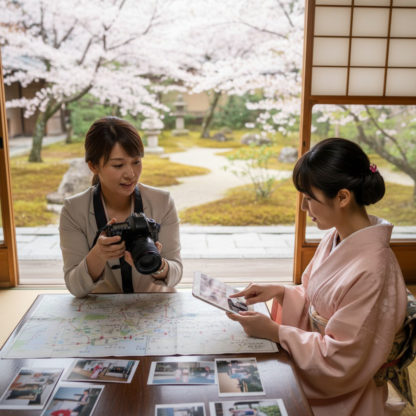
Successful professional photography sessions require adequate planning and communication. Discuss with your photographer which locations appeal most to your family, what time of day provides optimal schedules for children’s energy levels, and any specific photographic goals—whether capturing formal family portraits, candid interaction moments, or action shots of children engaging with environments.
Winter session timing significantly impacts results. Early morning sessions (7-9 AM) capture golden light and peaceful atmosphere before crowds arrive, providing exceptional conditions particularly for families with young children who perform better during earlier hours. Late afternoon sessions (4-6 PM) offer similar lighting quality but encounter increasing crowds and temperature drops as evening approaches.
Kimono and Family Styling for Winter Photos
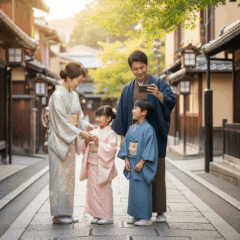
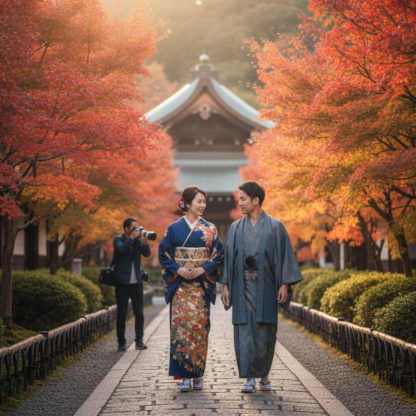
Many families visiting Kyoto consider wearing traditional kimono during their photography session—a choice that transforms casual tourist photography into distinctly cultural documentation. Winter presents particular opportunities for kimono styling that other seasons don’t provide as effectively.
Selecting Appropriate Family Kimono
Families new to kimono often wonder about appropriate selections for children, sizing challenges, and practical concerns regarding young people’s comfort in traditional dress. Winter kimono options emphasize warmth while maintaining aesthetic authenticity—heavier fabrics, richer colors, and coordinated family styling create visual coherence while ensuring genuine comfort.
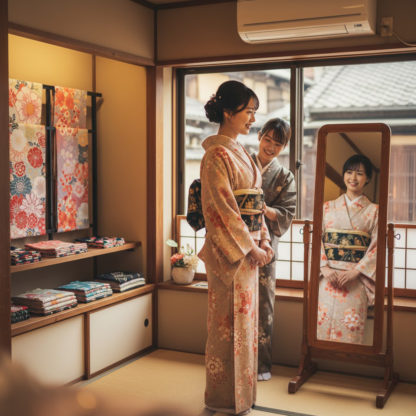
Professional rental services understand family sizing challenges and maintain diverse options accommodating both adults and children. Discussing your family’s composition with rental professionals ensures appropriate selections matching each family member’s body type, comfort level with traditional dress, and personal style preferences.
Coordinating Family Aesthetic
Families benefit from coordinated color schemes creating visual unity without requiring identical garments. Selecting complementary color families—one family member in warm jewel tones, others in coordinating cool tones, for example—creates aesthetic harmony that photographs beautifully. Professional stylists understand color coordination principles and can guide selections ensuring each family member feels authentically represented while creating cohesive visual presentation.
Practical Kimono Considerations for Photography
Children in particular require consideration regarding kimono wearing duration and comfort. Rather than committing to several hours of continuous wear, families often rent kimono specifically for professional photography sessions—60 to 90 minutes of wear achievable even for young children with careful preparation and appropriately selected garment styles.
Discuss with rental professionals which kimono types work best for photography purposes—designs photographing particularly beautifully, colors providing optimal contrast, and styles maintaining comfort during limited wear periods. Expert guidance ensures your family’s kimono experience supports rather than detracts from photography documentation.
Technical Photography Tips for Winter Kyoto Conditions
Even without professional equipment, understanding basic photography principles enhances image quality significantly. Winter’s particular lighting and atmospheric conditions demand attention to specific technical approaches.
Managing Winter Light Challenges
Winter’s lower solar angle creates warm, directional light—advantages for flattering faces and creating dimensional images. However, the dramatic angle also creates strong shadows requiring attention to positioning. Position family members with light angles considered—backlit situations can create lovely rim lighting, while side-lit positioning flatters faces while creating dimensional image quality.
Overcast winter days present different challenges. Cloud cover eliminates harsh shadows and creates soft, diffused light—excellent for even skin tones and reducing facial blemishes. However, overcast conditions require increased exposure compensation in camera settings to prevent underexposed (too dark) results. Understanding your camera’s metering modes and exposure compensation functions helps maintain proper brightness in variable conditions.
Composition Principles for Family Photography
Leading lines—pathways, temple corridors, canal edges—draw viewer attention through photograph composition toward family members. Positioning your family along these lines creates depth and visual interest beyond simple frontal portraits. Framing techniques—using foreground elements, architectural openings, or natural frames—add compositional sophistication that elevates casual snapshots.
Rule of thirds, though sometimes overemphasized in photography education, provides practical guidance for balanced composition. Mentally dividing photographs into a three-by-three grid and positioning important elements (faces, key background features) along these grid lines creates more visually engaging compositions than simply centering subjects.
White Balance and Color Accuracy
Winter’s golden light often produces warm color casts in photographs—sometimes enhancing warmth and creating appealing nostalgic tones, but sometimes creating unbalanced color if not managed intentionally. Understanding your camera’s white balance settings—or requesting professional photographers address white balance deliberately—ensures skin tones reproduce accurately rather than appearing orange or overly warm.
Planning Your Winter Family Photo Vacation in 2026
Successful winter family photography experiences require thoughtful planning across multiple dimensions. Understanding optimal timing, preparing appropriately, and coordinating services ensures your family vacation delivers genuine photographic results matching your investment in time and finances.
Selecting Your Specific Travel Dates
Within the winter season (December through February), specific periods offer advantages. Late December through early January captures holiday atmosphere and year-end clarity. Late January through early February provides optimal weather patterns in many years, with occasionally clearer skies than earlier winter months.
Weather patterns influence photographic conditions substantially. Snow is possible but infrequent in central Kyoto—generally occurring once or twice yearly if at all. Rather than planning specifically for snow, plan for likely conditions—cold but generally dry weather, clear skies on many days, and occasional rain or cloud cover. This realistic planning ensures positive experiences regardless of specific weather conditions.
Budgeting and Service Coordination
Quality family experiences in Kyoto involve coordinating multiple services. Kimono rental, professional styling, and photography services represent significant investments beyond basic accommodation and dining costs. Comprehensive packages offered by services like Kyoto Kimono Rental mimosa often provide value compared to independent service booking, while ensuring all providers operate with shared understanding of your preferences and requirements.
Budgeting for flexibility helps ensure positive experiences—travel sometimes involves unexpected weather changes, children’s illness, or other circumstances requiring schedule adjustments. Advance planning allows recovery and reschedule opportunities rather than forcing compromised experiences.
Preparing Children for Photography Experiences
Children perform better during photography when adequately prepared and understanding expectations. Discussing with children what to anticipate—that a professional photographer will take pictures, that wearing kimono will feel different but special, that locations may require walking or standing—helps children approach experiences with curiosity rather than anxiety.
Realistic scheduling ensures positive experiences. Young children perform better during morning sessions when energy levels peak. Building in rest breaks between locations and allowing flexibility regarding duration prevents the exhaustion often undermining photography quality toward session conclusions.
Frequently Asked Questions
Is winter a good time to visit Kyoto with young children?
Winter presents both advantages and challenges for young children. Advantages include fewer crowds, shorter daylight hours meaning fewer extended outdoor requirements, and the peaceful atmosphere often appealing to children. Challenges include cold weather requiring additional preparation and potential illness exposure in winter months. However, careful planning and appropriate clothing make winter entirely manageable and potentially superior to peak tourism seasons.
What should we wear under kimono in winter?
Proper underlayers are essential for comfort in winter. A traditional nagajuban (kimono undergarment) provides the authentic base. Modern thermal underlayers or layering pieces can be worn beneath traditional dress, allowing functional warmth while maintaining traditional appearance. Professional rental services guide appropriate layering ensuring both comfort and aesthetic authenticity.
How much does professional family photography cost in Kyoto?
Professional photography services in Kyoto range considerably based on photographer expertise, session duration, and deliverables included. Specialized services like Kyoto Kimono Rental mimosa typically charge ¥18,000 for 60-minute photography sessions, with package pricing available combining kimono rental, styling, and photography services. Request quotes from multiple providers to understand market options.
Can we take family photos at temples without professional services?
Absolutely. While professional photographers offer specialized expertise, families can take meaningful photographs independently. Understanding basic composition principles, optimizing for winter lighting conditions, and allowing adequate time for location exploration enables good results without professional services. Many beautiful family memories result from simple smartphone or personal camera documentation.
What locations photograph best in winter?
Temples with distinctive architecture photograph particularly beautifully in winter—Arashiyama, Fushimi Inari, and Kiyomizu-dera excel in winter light. Historic districts including Gion and Higashiyama emphasize architectural details beautifully when surrounded by winter’s minimalist landscape. Natural spaces including Philosopher’s Path maintain photographic appeal throughout winter.
Should we schedule photography in morning or afternoon?
Both periods offer advantages. Morning photography (7-9 AM) captures golden light and peaceful atmosphere before crowds arrive, typically suiting young children’s energy levels better. Afternoon photography (3-5 PM) provides similar golden light as sun approaches horizon, with greater flexibility regarding morning schedules. Consider your family’s particular rhythms and energy patterns when selecting timing.
Is kimono wearing necessary for good family photographs?
Wearing traditional kimono adds cultural dimension and creates distinctly beautiful aesthetic context—photographs in kimono often feel more special and memorable than standard tourist clothing. However, beautiful family photographs are entirely achievable in regular clothing. Whether wearing kimono represents personal preference and family priorities rather than photographic necessity.
How do we manage temperatures while wearing kimono?
Proper layering beneath and alongside traditional dress maintains warmth even in winter conditions. Multiple underlayers, thermal clothing, and strategic fabric selection ensure comfort without compromising aesthetic appearance. Discussion with rental professionals regarding winter-specific options ensures appropriate garment selections for comfortable extended wear.
Store Information
Kyoto Kimono Rental mimosa
? Address: 362 Masuya-cho, Higashiyama-ku, Kyoto
? Operating Hours: 8:00 AM – 7:00 PM
? Phone: [075-600-0422]
? Email: [kimono.mimosa01@gmail.com]
? WhatsApp: [wa.me/819085726361]
Services Offered:
- Premium Kimono & Yukata Rentals
- Professional Hair Styling & Traditional Arrangement
- Professional Photography Services (60 minutes: ¥18,000)
- Tea Ceremony Experiences (1-6 persons: ¥39,000; 7+ persons: ¥6,000 per person)
- Zen Meditation Sessions
- Group Package Experiences
- Basic Kimono Rental: ¥4,000+
Kyoto Kimono Rental mimosa specializes in transforming family Kyoto visits into genuinely memorable cultural experiences through comprehensive services combining premium kimono rentals, expert styling, and professional photography documentation. Their understanding of family dynamics, experience working with children, and commitment to quality service ensures that winter family photography sessions capture authentic connection and cultural authenticity worth preserving for generations. Whether seeking candid family moments, formal portrait documentation, or complete cultural immersion experiences, Kyoto Kimono Rental mimosa provides the expertise and services supporting your 2026 family vacation becoming a genuinely treasured shared memory.