
Thinking About Renting a Kimono in Kyoto?
Walking through Kyoto already feels like stepping into a different rhythm. Narrow streets, wooden townhouses, the sound of footsteps on stone. Add a kimono to that scene, and the experience shifts again. It stops feeling like sightseeing and starts to feel like being there.
Many travelers consider renting a kimono while visiting Kyoto, but hesitate. Is it too touristy? Will it feel uncomfortable? Is it really worth the time? Those questions come up a lot, especially for first-time visitors.
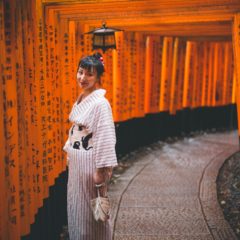
Pairing a kimono rental with a professional photo session in Gion changes the equation. Instead of worrying about how you look or whether your photos turn out, the focus moves back to the experience itself. Walking, pausing, letting Kyoto set the pace. The photos become a byproduct of a good moment, not something you have to manage.
Why Gion Is One of the Best Areas for a Kimono Experience
Gion isn’t just famous. It’s textured. The streets are compact, visually calm, and deeply tied to Kyoto’s history. Wooden facades, lattice windows, narrow alleys that bend slightly instead of stretching straight ahead. A kimono doesn’t stand out here. It fits.
That matters more than people expect.
In busier parts of the city, wearing a kimono can feel like a costume. In Gion, it blends into the scenery. The scale of the streets makes walking slower and more deliberate, which naturally matches the way a kimono is worn. Steps shorten. Posture changes. You notice details you might otherwise rush past.
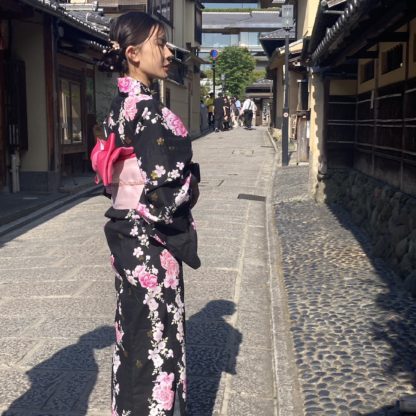
This is also why Gion works so well for photography. Backgrounds stay clean. Power lines and modern signage fade into the edges. Even a short walk can produce a variety of scenes: a quiet lane, a traditional gate, a soft turn in the road where light shifts suddenly.
Morning and late afternoon are especially good. The light falls at an angle, shadows stretch, and the area feels calmer before or after peak foot traffic. Those small timing details make a big difference in how photos turn out.
Who This Kimono & Photo Session Experience Is For
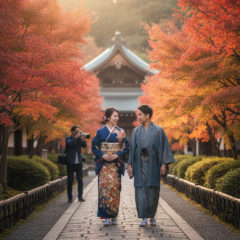
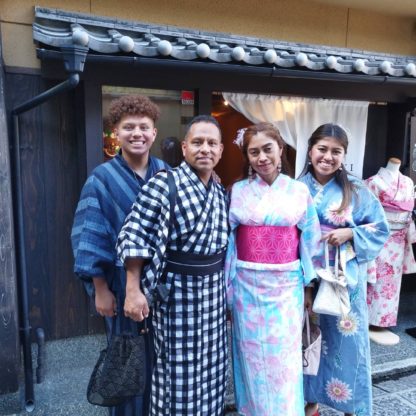
This kind of experience suits travelers who want more than a checklist photo. It works well for couples looking for something meaningful to share, friends traveling together who want more natural photos, and solo travelers who don’t want their memories limited to selfies.
It’s also surprisingly good for people who think they’re “not photogenic.”
A professional photo session removes pressure. There’s no guessing angles or rushing to set up shots. You walk, stop occasionally, and let someone else handle timing and framing. Most people relax after the first few minutes. That’s usually when the best photos happen.
Comfort matters too. Modern kimono rentals are designed for walking, not standing still. With proper fitting, movement feels more natural than expected. Many travelers are surprised by how manageable it is, even over a couple of hours.
This experience tends to resonate with travelers who value memories they can revisit later. Not just images of landmarks, but photos that capture how it felt to be there. The quiet moments between destinations. The way Gion sounds when you slow down.
If that kind of memory matters, starting with the right setting makes all the difference.
The Appeal of a Kimono Rental with a Professional Photo Session
There’s a moment that happens during most trips. You realize you’ve seen beautiful places, but your photos don’t quite match the feeling. Too rushed. Too posed. Or simply missing you in the scene.
A kimono rental paired with a professional photo session changes that balance. It slows the experience down and gives it a shape. You’re not chasing spots. You’re moving through them, with intention.
Why Photos Matter More Than You Expect During a Japan Trip
Japan tends to stay vivid in memory. The colors, the textures, the quiet details. But those impressions fade faster than expected once the trip ends. Photos become the way you return to those moments.
The difference is how those photos are taken.
When someone else handles the camera, your attention shifts outward. You notice the sound of gravel underfoot, the way sleeves move when you turn, the pause before crossing a narrow street. Those small, unplanned moments rarely show up in rushed snapshots.
A photo session doesn’t mean constant posing. Most of the time, it’s walking and stopping briefly when the light or background feels right. The result tends to look natural, almost accidental. That’s why these photos age well. They don’t feel tied to a trend or a pose you’ll cringe at later.
Travelers often say these become the images they frame or keep on their phone long after the trip. Not because they’re perfect, but because they feel honest.
What Makes a Professional Photo Session Different from Selfies
Selfies flatten an experience. Arms extend, faces center, backgrounds blur into proof that you were “there.” A professional photographer works differently.
They pay attention to spacing. How far you are from the background. How light wraps around fabric. Where the street curves instead of running straight. These details are subtle, but they’re what make a photo feel calm rather than busy.
Another difference is pacing. There’s no rush to capture everything. Fewer photos are taken, but each one is considered. That slower rhythm matches the feeling of wearing a kimono in Gion. Nothing feels forced.
It also removes the constant decision-making. No checking screens. No retakes. You’re free to stay present, knowing the moment is already being captured.
That freedom is usually what people remember most. The photos matter, yes. But the relief of letting go matters just as much.
What the Kimono Rental Experience in Gion Is Like
For many visitors, the biggest unknown is what the actual flow feels like. Not the highlights, but the in-between moments. The parts that decide whether the experience feels smooth or awkward.
In Gion, the rhythm is usually calm. That alone makes a difference.
From Choosing a Kimono to Getting Dressed
It starts quietly. Racks of kimono arranged by color and pattern, from subtle neutrals to designs that stand out in photos. Most people gravitate toward what catches their eye first, then adjust once they see it held up or laid out.
This part is more intuitive than technical. You don’t need to understand kimono rules or history. Staff usually help balance color, season, and fit in a way that feels natural, especially for first-timers.
Getting dressed takes longer than expected, but not in a bad way. Layers are added carefully. The obi changes how you stand. Sleeves suddenly have weight. There’s a brief moment of “this feels different,” followed by a surprising sense of structure.
By the time everything is finished, posture has shifted. Shoulders settle. Steps slow down. That adjustment happens before you even step outside.
Walking Through Gion in a Kimono
The first few minutes outside are the most noticeable. You feel the ground more clearly. Stone paths, slight slopes, uneven edges. Gion encourages that awareness.
Walking in a kimono isn’t about covering distance. It’s about moving through space. Shorter steps feel better. Turning corners takes an extra second. Those pauses are part of the experience, not interruptions.
In quieter lanes, the soundscape changes too. Less traffic noise, more footsteps, occasional voices carried from a distance. When the area isn’t crowded, it’s easy to forget you’re in the middle of a popular destination.
This is where many people stop thinking about how they look and start enjoying how the place feels. That shift shows up in photos later.
How a Typical Photo Session in Gion Flows
A photo session in Gion usually blends into the walk itself. There’s no fixed “shooting spot” checklist. Instead, the photographer watches how you move through the streets and steps in when the setting aligns.
You might pause near a wooden wall where light softens the background. Or stop briefly at a bend in the road where the street narrows. These moments are short. A few frames, then you continue.
There’s very little posing. Maybe a suggestion to turn slightly, slow down, or look ahead instead of at the camera. Most of the time, you’re just walking as you already are.
That’s why the experience doesn’t feel staged. It feels like a walk that happens to be documented.
By the end, people often realize they forgot about the camera entirely. And that’s usually the sign that the session worked.
How to Choose the Right Kimono Rental in Kyoto
Kyoto has no shortage of kimono rental shops. Walk a few blocks and you’ll see several options, each promising a similar experience. The differences aren’t always obvious at first glance, but they matter once you’re actually wearing the kimono and walking around.
Choosing well makes the day feel effortless. Choosing poorly tends to show up halfway through the walk.
Location and Easy Access in Gion
Where the shop is located affects more than convenience. Renting a kimono close to Gion means less time navigating crowded transport and more time actually enjoying the area.
Walking long distances in a kimono isn’t difficult, but it does change how you move. Starting close to where you plan to explore keeps the experience relaxed.
Another small but important point is the route itself. Streets in and around Gion are easier to walk than major roads. Fewer crowds, fewer sudden stops, fewer moments of feeling rushed.
Kimono Styles, Sizing, and Comfort
Comfort starts with fit. A kimono that looks beautiful on a hanger can feel restrictive if sizing isn’t handled properly.
A good rental experience accounts for this without making it awkward. Adjustments happen quietly. Layers are balanced so weight doesn’t pull in one direction.
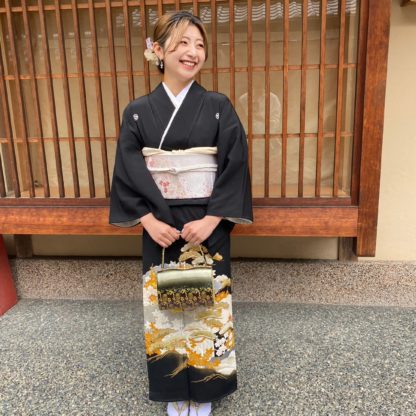
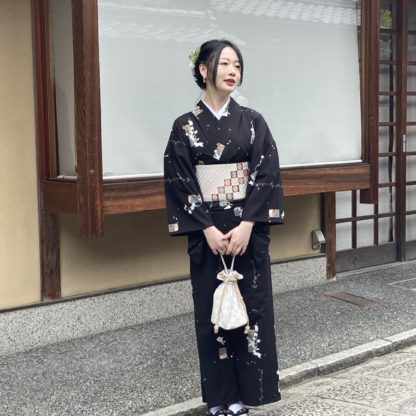
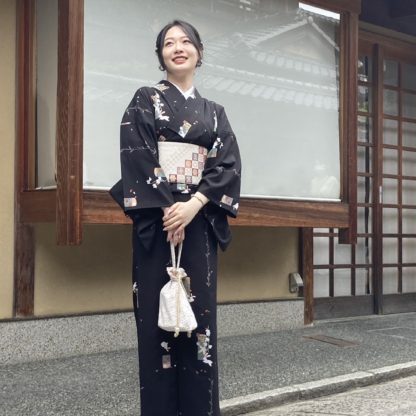
Style matters too, but not in a trend-driven way. Simple patterns often photograph better in Gion’s muted streets.
English Support and Communication
Clear communication removes friction. Especially when the experience includes fitting, timing, and a photo session.
English support doesn’t need to be perfect. What matters is clarity. Knowing when to return the kimono. Understanding how long the photo session lasts.
In the end, the right kimono rental isn’t just about appearance. It’s about how smoothly everything fits together.
Common Questions About Kimono Rental and Photo Sessions in Kyoto
【Q】Do I need to book a kimono rental in advance?
【A】Booking in advance is strongly recommended, especially in Kyoto and even more so in Gion. Advance reservations make the experience smoother and allow better scheduling around light and timing.
【Q】How long does the experience usually take?
【A】Most experiences take a few hours in total, including dressing, walking, and the photo session. The pace is relaxed rather than rushed.
【Q】Can beginners wear a kimono comfortably?
【A】Yes. Modern rentals are designed for sightseeing, and most people adapt quickly once they start walking.
【Q】What happens if it rains on the day?
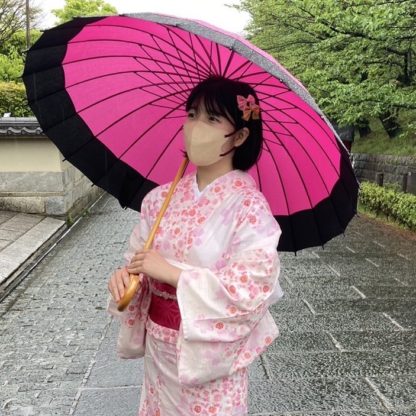
【A】Light rain often adds atmosphere. For heavier rain, routes and timing may be adjusted depending on conditions.
【Q】Can couples or families join the same photo session?
【A】Yes. Couples and families often book together, and natural interactions tend to photograph well.
What Travelers Say After Their Kimono Photo Experience
A Memorable Way to Experience Kyoto
Many travelers describe the experience as quieter than expected. Walking through Gion at a slower pace shifts attention from landmarks to atmosphere.
Some mention subtle changes in interaction with locals. Others say the streets themselves became the highlight.
Why Many Travelers Say the Photos Were Worth It
The photos often become the most talked-about part afterward. Not because they’re perfect, but because they bring back the feeling of the day.
For couples, solo travelers, and families alike, the images capture moments that happen naturally when no one is focused on the camera.
A Kyoto Memory You Can Take Home
Why a Kimono Photo Session in Gion Stays Special
Gion invites you to slow down. Wearing a kimono aligns with that rhythm, creating space for presence rather than performance.
The photos don’t just show where you went. They bring back how the day felt.
When You’re Ready to Plan Your Kimono Experience
If renting a kimono in Kyoto has been on your mind, pairing it with a professional photo session in Gion is worth considering.
Checking availability early helps keep the day unhurried. Long after the trip ends, these photos tend to stay visible, revisited, and remembered.