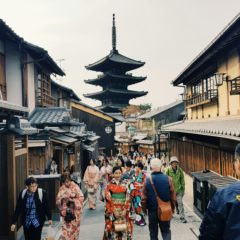
Visiting Kitano Tenmangū in Kimono During the Antique Market: A Cultural Journey Through Kyoto’s Timeless Traditions
Visiting Kitano Tenmangū in Kimono During the Antique Market: A Cultural Journey Through Kyoto’s Timeless Traditions
A Walk Into Kyoto’s Living Heritage
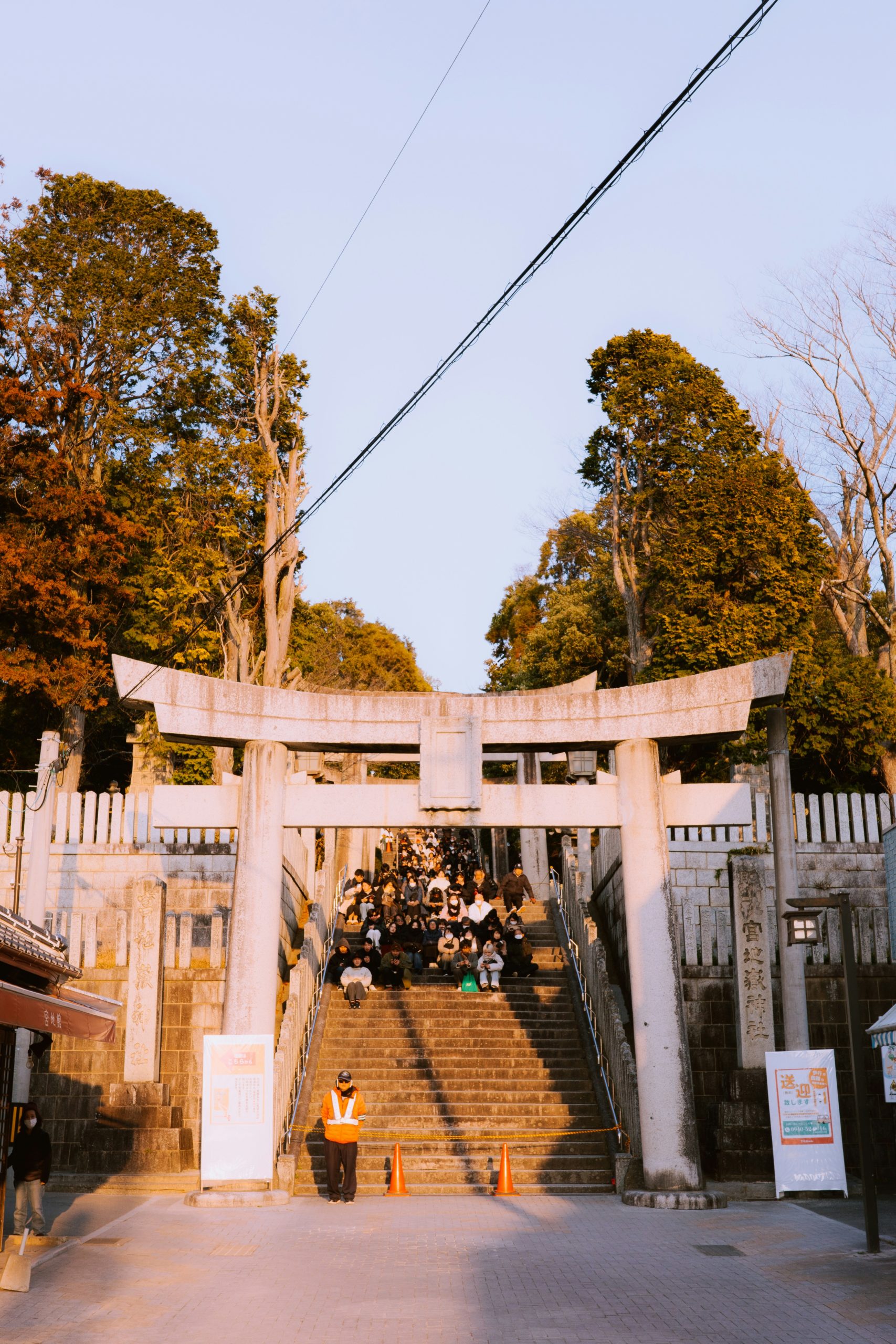
Kyoto is a city where history is not merely preserved—it is lived, breathed, and experienced in the quiet steps of visitors moving through ancient streets. Few places embody this sentiment as vividly as Kitano Tenmangū, one of Kyoto’s most respected Shinto shrines. Revered for centuries as the home of Sugawara no Michizane, the deity of learning and scholarship, the shrine stands surrounded by towering trees, vermilion gates, stone lanterns, and a uniquely calm stillness, even on its busiest days.
The magnificent vermilion architecture of Kitano Tenmangū Shrine
But on the 25th of every month, something magical happens: the shrine transforms into a bustling antique market known as Tenjin-san. Vendors line the grounds with treasures from centuries past—old ceramics, kimono fabrics, tea utensils, vintage toys, art, and curious objects that hold their own stories. It becomes a vibrant world where Kyoto’s past and present blend into a single lively tapestry.
To visit Kitano Tenmangū on this day wearing a kimono is not just sightseeing—it is entering the flow of history itself. Wrapped in traditional clothing, surrounded by merchants, students, families, and local craftsmen, you become part of a living scene that has played out in Kyoto for generations.
The Charm of Wearing a Kimono at Kitano Tenmangū
A kimono adds an extra layer of elegance and significance to the visit. The shrine’s deep reds, soft greens, and stone textures form a stunning backdrop for kimono of all colors and patterns. Many visitors choose light pastels or floral motifs in warmer seasons, while in autumn deeper hues—burgundy, indigo, gold—mirror the maple leaves transforming around the shrine.
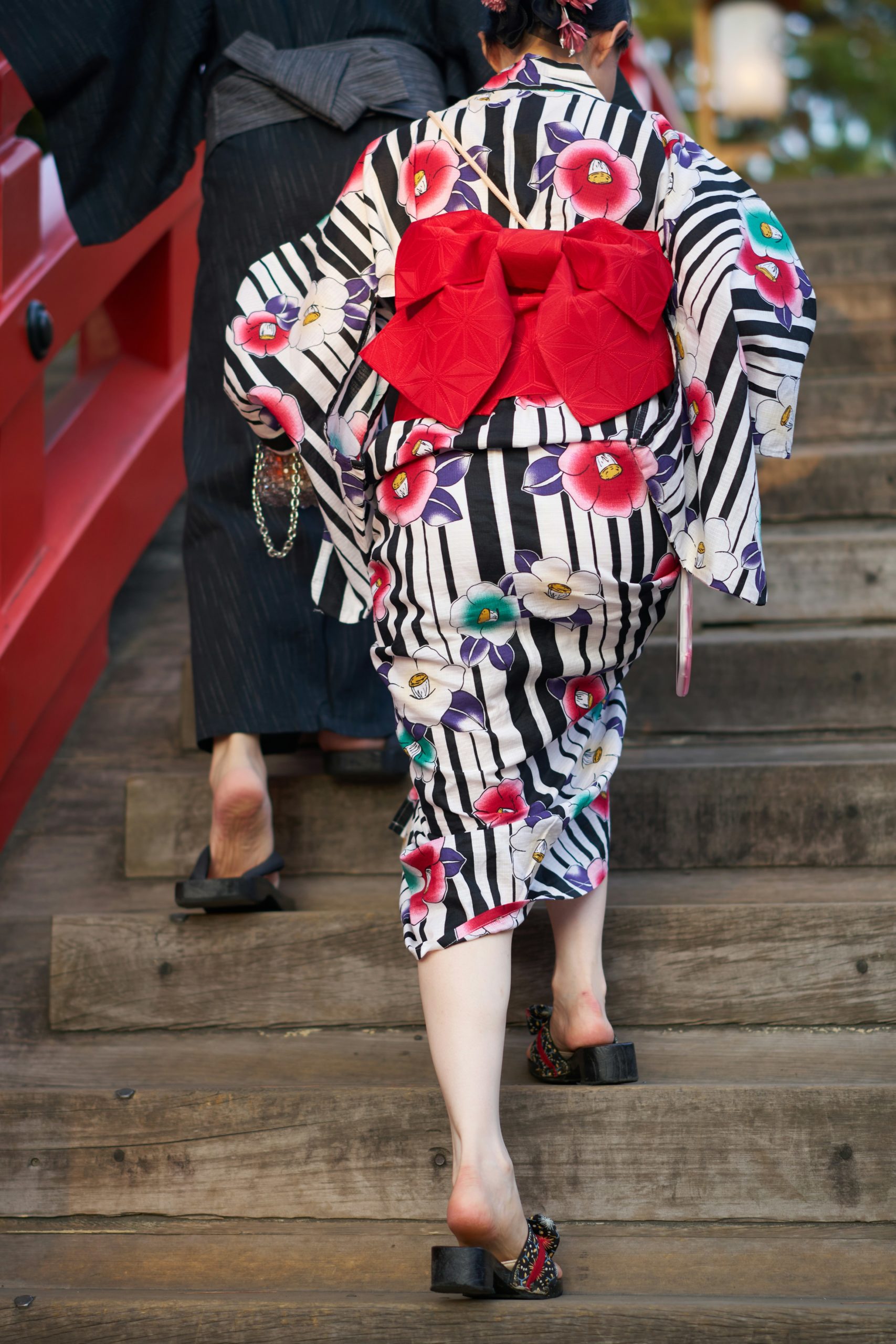
The elegance of wearing kimono at a traditional Japanese shrine
The experience of walking through the tree-lined path, adjusting your obi, and hearing the subtle rustle of the fabric as you move brings an intimate awareness of your surroundings. You are not just watching history; you are inhabiting it. Wearing a kimono also encourages a slower, more mindful pace—perfect for appreciating the rituals and atmosphere of Kitano Tenmangū.
For those who want to rent a kimono in Kyoto and prepare for this special visit, local shops such as Kimono Rental Mimosa offer beautiful selections suitable for all seasons and occasions, along with professional assistance to ensure a comfortable and polished fit.
Tenjin-san: Kyoto’s Most Beloved Monthly Antique Market
The antique market held at Kitano Tenmangū is unlike any other. Known to locals simply as Tenjin-san, the market fills the shrine’s grounds with rows of tents and stalls, attracting collectors, students, families, and tourists all seeking something unique.
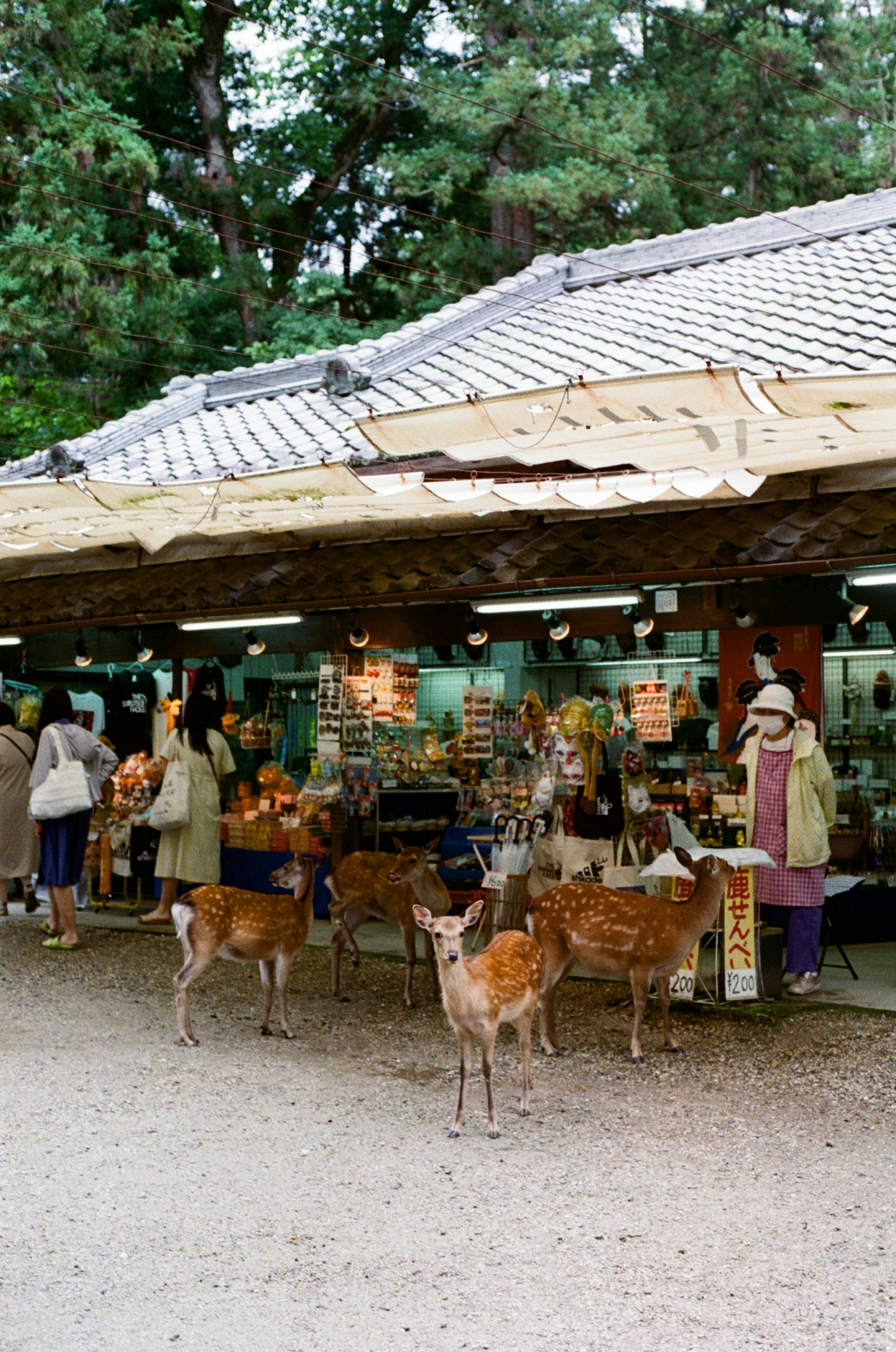
The bustling Tenjin-san antique market with traditional wares and treasures
The atmosphere feels both festive and nostalgic. You can browse through handcrafted pottery, vintage kimono, lacquerware, geta sandals, antique books, ukiyo-e prints, old coins, and countless other pieces of Kyoto’s cultural heritage. Some items cost only a few hundred yen, while others, especially rare antiques, can be more valuable. The joy of exploration is woven into every step—turning a corner might reveal a beautifully preserved tea bowl, a Meiji-era brooch, or an old wooden toy that once delighted a child a century ago.
For kimono lovers, Tenjin-san is a treasure trove. Bolts of fabric, obi belts, kanzashi hair ornaments, and seasonal accessories appear in every style imaginable. Walking through the market in kimono often creates delightful interactions with vendors, who appreciate the effort and elegance of traditional attire.
A Sanctuary of Learning and Spiritual Reflection
While the market is lively, the shrine itself remains a place of devotion and contemplation. Kitano Tenmangū is famous for its connection to academic success, and students visiting before exams can be seen writing wishes on small wooden ema boards. Others come to admire the centuries-old architecture, from the grand main hall to the stone bridges and peaceful gardens.
Wearing a kimono heightens this connection. Standing before the honden, bowing gently while adjusting your sleeves, you feel aligned with the centuries of worshippers who have stood in the same place. The atmosphere invites a deep sense of respect for the traditions that have shaped Kyoto’s cultural identity.
The Sensory Experience of Visiting During the Market
On market days, the senses awaken in unexpected ways. The sound of vendors calling out softly echoes beneath the shrine’s trees. The fragrance of incense wafts from small altars. You might catch the scent of freshly roasted chestnuts or sweet dango from nearby food stalls. These sensory elements, combined with the feel of your kimono’s soft fabrics and the visual richness of antiques, make the visit profoundly memorable.
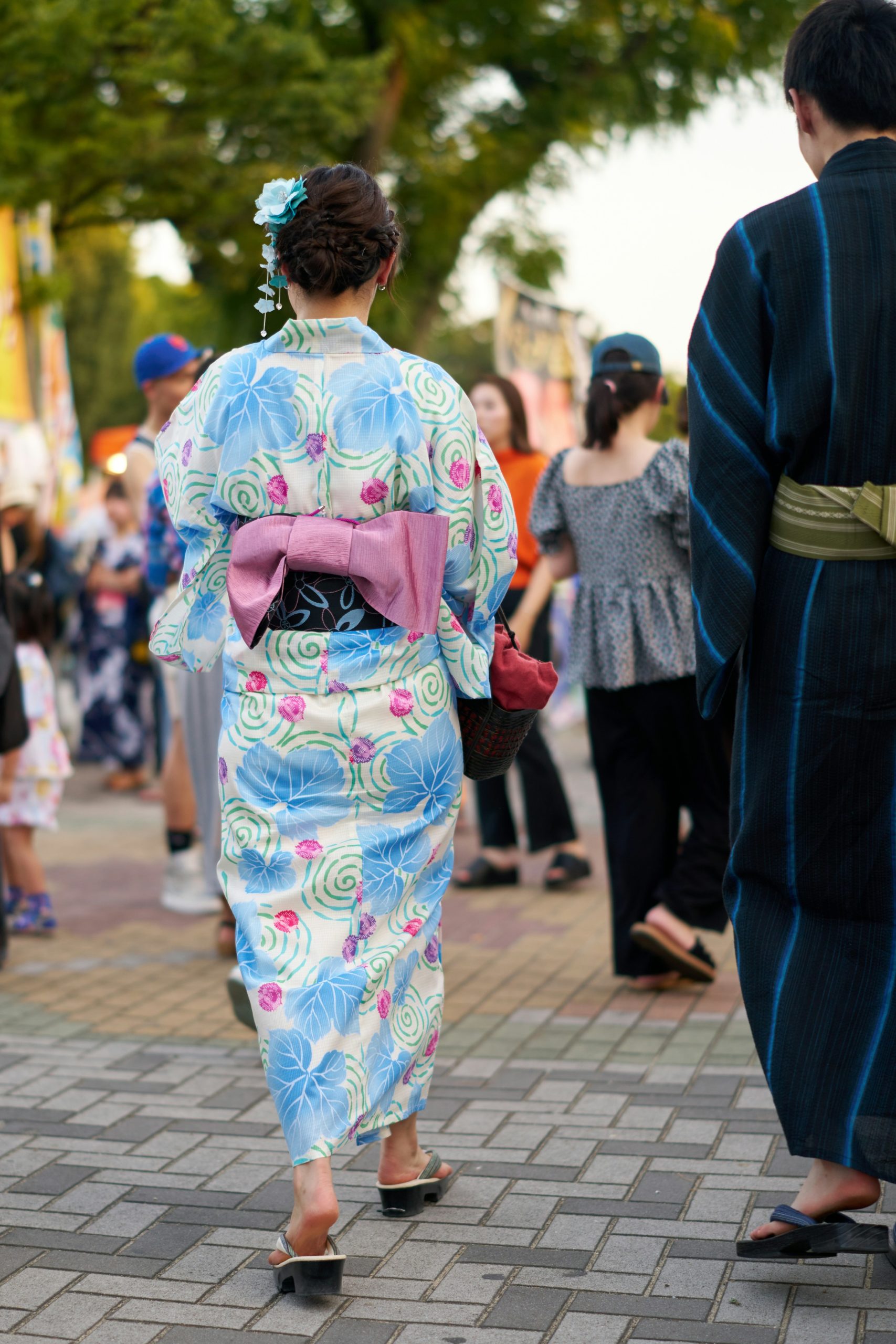
Beautiful kimono selections await visitors in Kyoto
Photography enthusiasts find the shrine particularly captivating on market days. The combination of historic architecture, bustling market energy, and traditional attire creates countless photo opportunities. Visitors wearing kimono stand out beautifully against the textured scenery, making their journey both personal and photogenic.
Seasonal Highlights at Kitano Tenmangū
Each season changes the character of Kitano Tenmangū in its own way.
Spring brings blooming plum blossoms, which the shrine is famous for. The elegant colors pair wonderfully with pastel kimono and soft floral patterns.
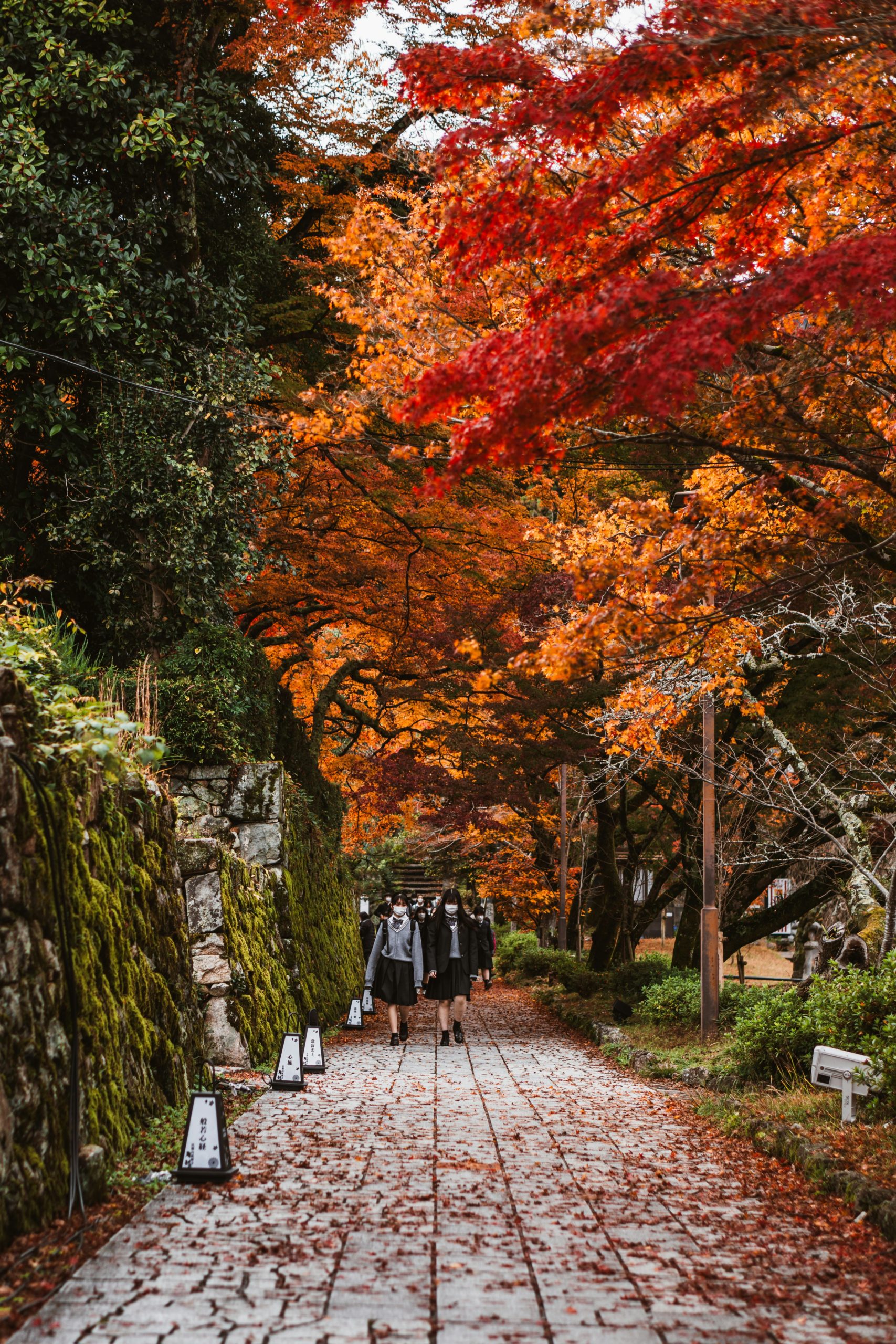
Spring plum blossoms create a stunning backdrop at Kitano Tenmangū
Summer is lively and energetic, with deep greens that contrast beautifully with bright cotton yukata.
Autumn transforms the shrine into a palette of red and gold. Visiting in kimono during the fall antique market feels especially magical as the leaves gently fall across the pathways.
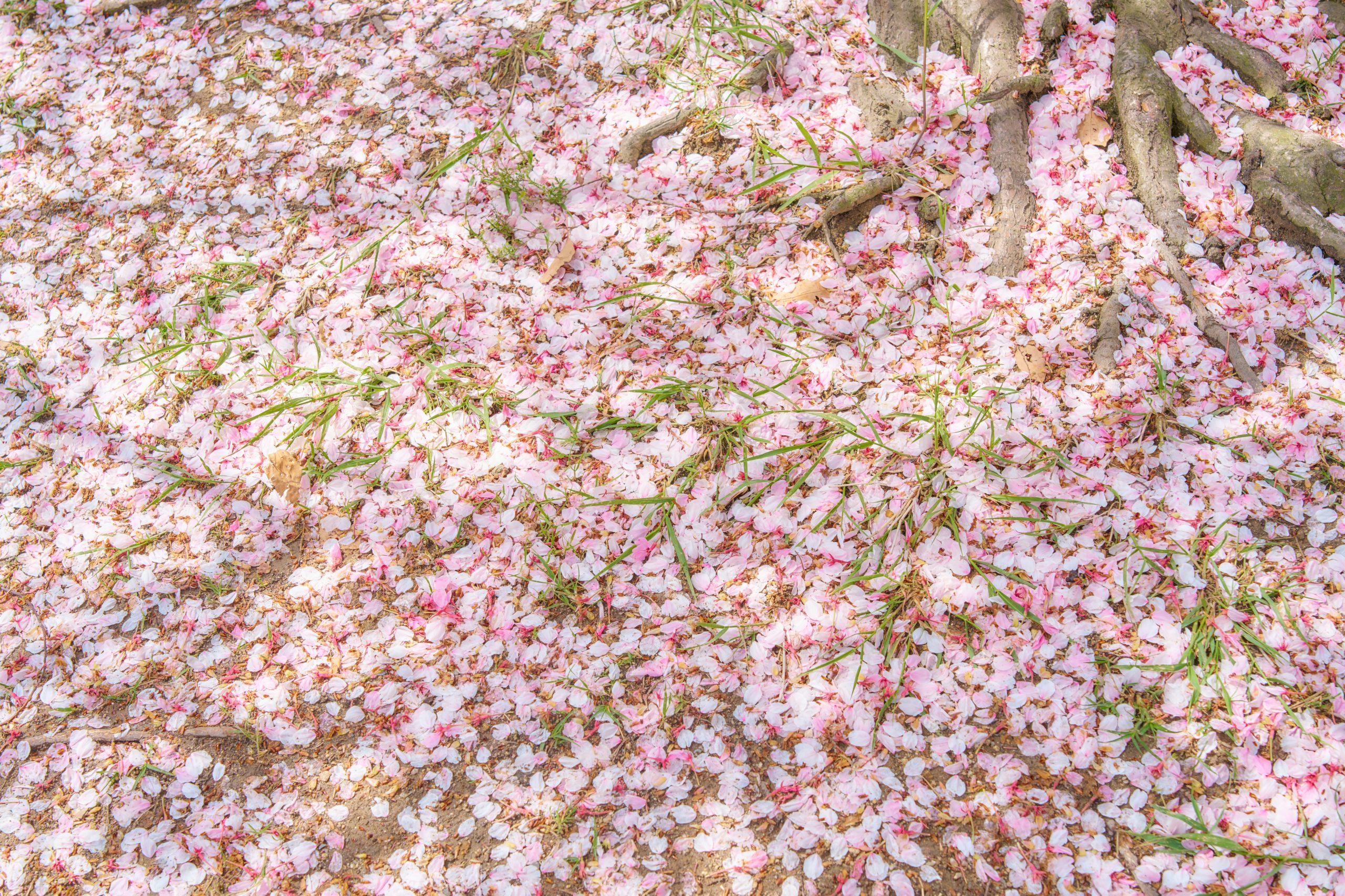
Autumn colors transform Kyoto’s shrines into breathtaking landscapes
Winter offers crisp air, quiet beauty, and the chance to layer warm kimono accessories such as haori jackets or shawls.
Whatever the season, combining the beauty of Kitano Tenmangū with the excitement of Tenjin-san makes for an unforgettable experience.
Moving Through the Market With Grace
Wearing a kimono in a crowded space like an antique market requires a bit of care, but it also enhances your awareness. The narrow pathways between stalls encourage gentle, deliberate movements. The presence of other visitors—many of whom may also be wearing kimono—creates a shared cultural rhythm.
Vendors often smile warmly at visitors dressed in traditional attire. Conversations flow naturally, whether you are admiring an antique tea bowl or learning about an old kimono’s pattern. This exchange is part of the charm of Tenjin-san. The market becomes a place where culture is not only displayed but actively shared.
Finding Meaning in Simple Moments
Visiting Kitano Tenmangū in kimono during the antique market allows you to experience Kyoto at its fullest. It is not a rushed sightseeing tour, but a journey through layers of culture, craftsmanship, and spirituality. The day becomes filled with meaningful details: the fit of your obi, the way sunlight filters through the shrine’s trees, the sound of wooden geta on stone, the warmth of a vendor’s greeting, the feeling of discovering a handmade object that speaks to you.

Vintage kimono and traditional treasures await discovery at Kyoto’s antique markets
These moments, though small, connect you to the essence of Kyoto. They reveal a city that treasures its past while inviting you to participate—not as a spectator, but as someone walking respectfully within its traditions.
A Memorable Cultural Encounter
When you leave the shrine after exploring the antique market, your kimono still perfectly tied, you carry more than souvenirs. You take with you a deeper understanding of Kyoto’s spirit—its elegance, its resilience, and its dedication to preserving cultural beauty.
A visit to Kitano Tenmangū in kimono is not only an activity but an experience that stays with you long after you return home. It is a reflection of Kyoto’s timeless charm, made even more special when lived through the textures, colors, and traditions of kimono.
For those preparing their own visit, renting a kimono from a trusted Kyoto shop like Kimono Rental Mimosa can elevate the journey into a celebration of culture, beauty, and personal memory.