
The Kimono in Imperial Kyoto: How the Nobility Dressed

Introduction: Where Tradition Meets Imperial Grandeur
In the heart of Japan’s ancient capital, where golden temples gleam against mountainous backdrops and traditional architecture whispers tales of bygone eras, the kimono reached its most magnificent expression. Imperial Kyoto, once known as Heian-kyō, served as the epicenter of Japanese culture, politics, and fashion for over a millennium. Here, within the confines of the Imperial Palace and the residences of court nobles, the kimono evolved from simple garments into breathtaking works of art that reflected status, season, and sophisticated aesthetic sensibilities.
The story of how Kyoto’s nobility dressed is not merely a tale of clothing—it’s a journey through Japanese history, artistry, and the profound cultural values that shaped an empire. From the flowing jūnihitoe worn by court ladies to the dignified sokutai of high-ranking officials, every thread told a story of power, beauty, and tradition.

The Birth of Imperial Fashion in Kyoto
The Heian Period: Golden Age of Aristocratic Dress
The Heian period (794-1185) marked the beginning of Kyoto’s reign as Japan’s cultural heart. During this era, the imperial court developed an incredibly sophisticated dress code that would influence Japanese fashion for centuries to come. The capital’s isolation from Chinese influence allowed uniquely Japanese aesthetic principles to flourish, creating garments of unparalleled beauty and complexity.
Court nobles during this period weren’t simply wearing clothes—they were participating in an elaborate visual language that communicated everything from their rank in society to their literary sophistication. The famous Tale of Genji, written by court lady Murasaki Shikibu in early 11th-century Kyoto, provides detailed descriptions of the sumptuous garments that defined aristocratic life.
The Imperial Palace: Center of Fashion Innovation
Within the walls of Kyoto’s Imperial Palace, fashion served as both art and politics. The emperor and empress set trends that rippled throughout the noble class, while court ceremonies demanded specific garments that had been refined over generations. These weren’t merely costumes—they were expressions of divine authority and cultural refinement that legitimized imperial rule.
The palace workshops employed master craftsmen who dedicated their lives to perfecting techniques in silk weaving, dyeing, and embroidery. These artisans created garments so exquisite that they were considered treasures of the realm, passed down through generations and preserved in temple collections that we can still admire today.
The Jūnihitoe: Pinnacle of Court Lady Fashion
Twelve Layers of Perfection
The jūnihitoe, literally meaning “twelve layers,” represents perhaps the most sophisticated garment ever created in human history. Court ladies in imperial Kyoto wore this elaborate ensemble during formal ceremonies, creating a silhouette that was both otherworldly and deeply symbolic.
Each layer served a specific purpose, from the white kosode worn closest to the skin to the outermost uchiki that displayed the wearer’s family crest and seasonal awareness. The arrangement of colors—called kasane-no-irome—followed strict aesthetic principles that demonstrated the wearer’s cultural refinement and understanding of poetry, nature, and classical literature.

The Art of Color Coordination
Color combinations in the jūnihitoe weren’t random choices—they were sophisticated artistic statements that referenced classical poetry, seasonal changes, and literary allusions that any educated person at court would immediately recognize. Popular combinations included:
-
Koubai (Red Plum): Deep red outer layer with white inner layers, evoking plum blossoms in snow
-
Yamabuki (Mountain Rose): Golden yellow tones suggesting autumn chrysanthemums
-
Murasaki (Purple): Various purple shades referencing the famous literary work and suggesting imperial connection
The sleeves of each layer were carefully arranged to create a cascade of colors visible at the wrists and hem—a detail called “layered sleeves” (kasane no sode) that required incredible skill to achieve properly.
Seasonal Sensitivity and Cultural Meaning
Court ladies changed their color combinations with the seasons, following a complex calendar that aligned clothing choices with natural phenomena, classical poetry, and court ceremonies. Wearing the wrong colors at the wrong time wasn’t just a fashion faux pas—it was considered a sign of poor education and cultural insensitivity that could affect one’s standing at court.
Men’s Court Dress: The Sokutai and Beyond

Imperial Masculine Elegance
While court ladies captured attention with their layered splendor, noblemen in imperial Kyoto developed their own sophisticated dress traditions. The sokutai—formal court dress for men—consisted of multiple coordinated pieces that created an impression of dignity and authority appropriate for those who governed the realm.
The sokutai included a lined silk robe (ho), wide-legged trousers (sashinuki), and various accessories including caps, shoes, and ceremonial swords. The colors and patterns of these garments indicated the wearer’s court rank, with specific hues reserved for the highest nobles and imperial family members.
The Ho: Centerpiece of Noble Attire
The ho—the main robe of court dress—featured wide sleeves and a long train that required careful movement and posture. These garments were often decorated with intricate patterns that held symbolic meaning: dragons for imperial power, phoenixes for noble virtue, and seasonal motifs that demonstrated cultural sophistication.
High-ranking nobles wore ho in specific colors that corresponded to their position in the court hierarchy. Purple robes were reserved for the highest ranks, while lower nobles wore graduated shades of blue, green, and brown according to strict protocols established by imperial decree.
Textile Arts and Craftsmanship in Imperial Kyoto
Master Weavers and Silk Production
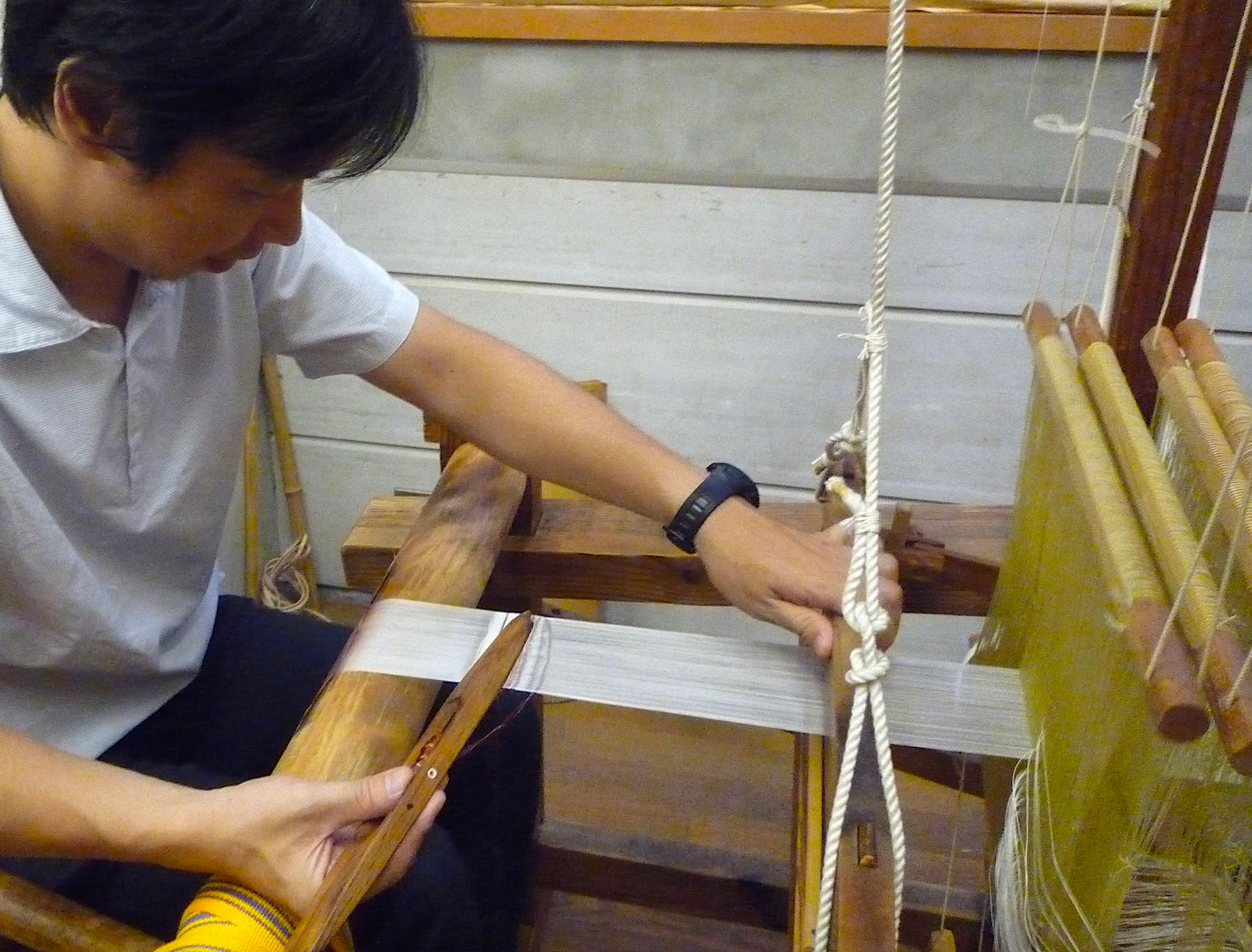
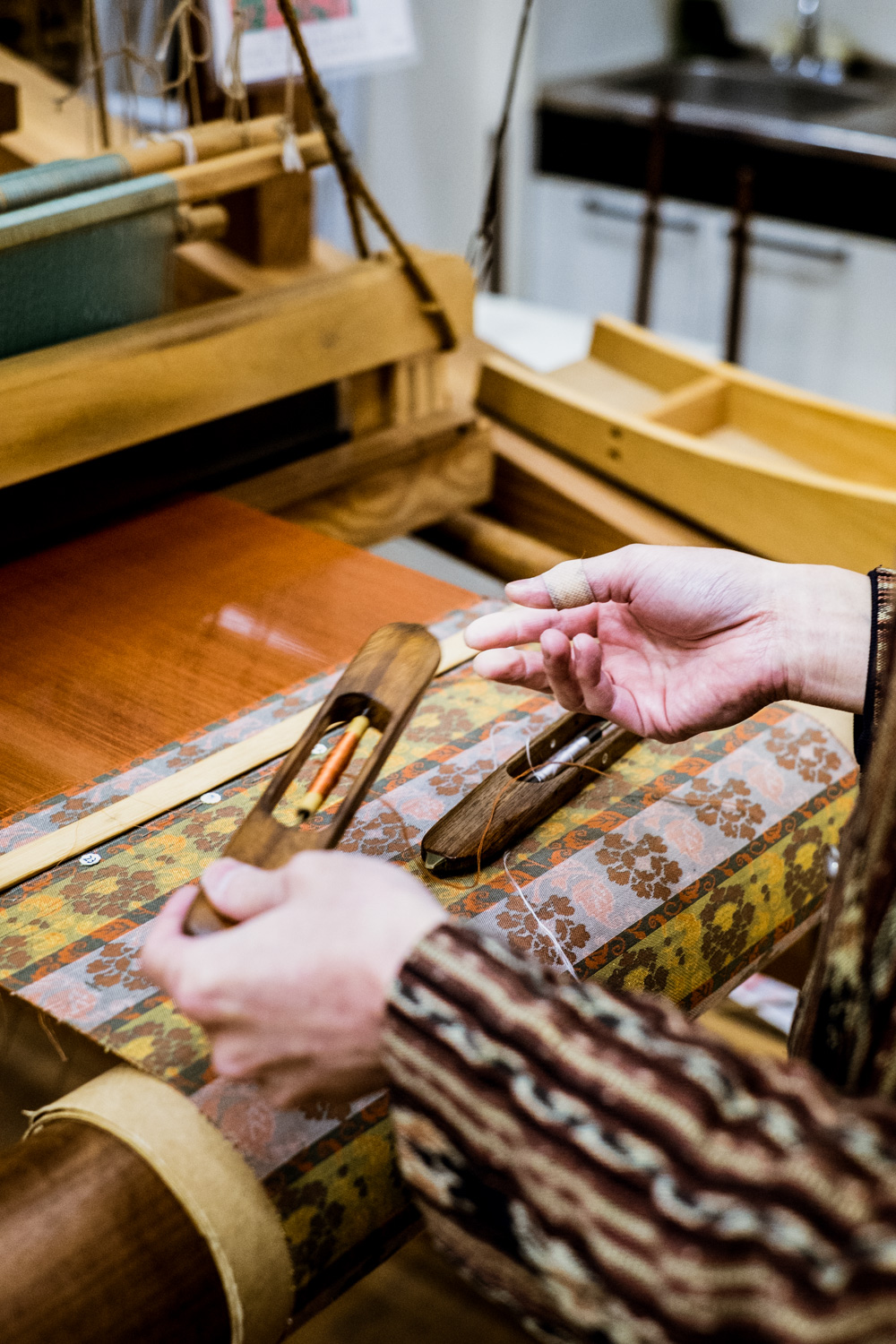
Kyoto’s position as the imperial capital attracted the finest textile artisans from across Japan. The city’s workshops became legendary for producing silk fabrics of extraordinary quality, using techniques that had been refined over centuries and closely guarded as trade secrets.
The process of creating court-quality silk began with carefully tended silkworms and continued through multiple stages of spinning, dyeing, and weaving that could take months to complete. Master weavers developed specialized techniques for creating complex patterns and textures that enhanced the natural beauty of the silk while adding layers of symbolic meaning.
Natural Dyeing Techniques
The brilliant colors that characterized imperial court dress came from natural sources carefully harvested and processed by expert dyers. Safflower produced the coveted deep reds, while indigo created the various blues that denoted different court ranks. Purple dyes, extracted from purple root (murasaki), were so expensive and time-consuming to produce that they became synonymous with imperial luxury.
Dyeing masters developed techniques for creating graduated color effects and complex patterns that seemed to shift and change as the wearer moved. These effects required multiple dye baths and precise timing that represented the culmination of generations of accumulated knowledge.
Embroidery and Surface Decoration
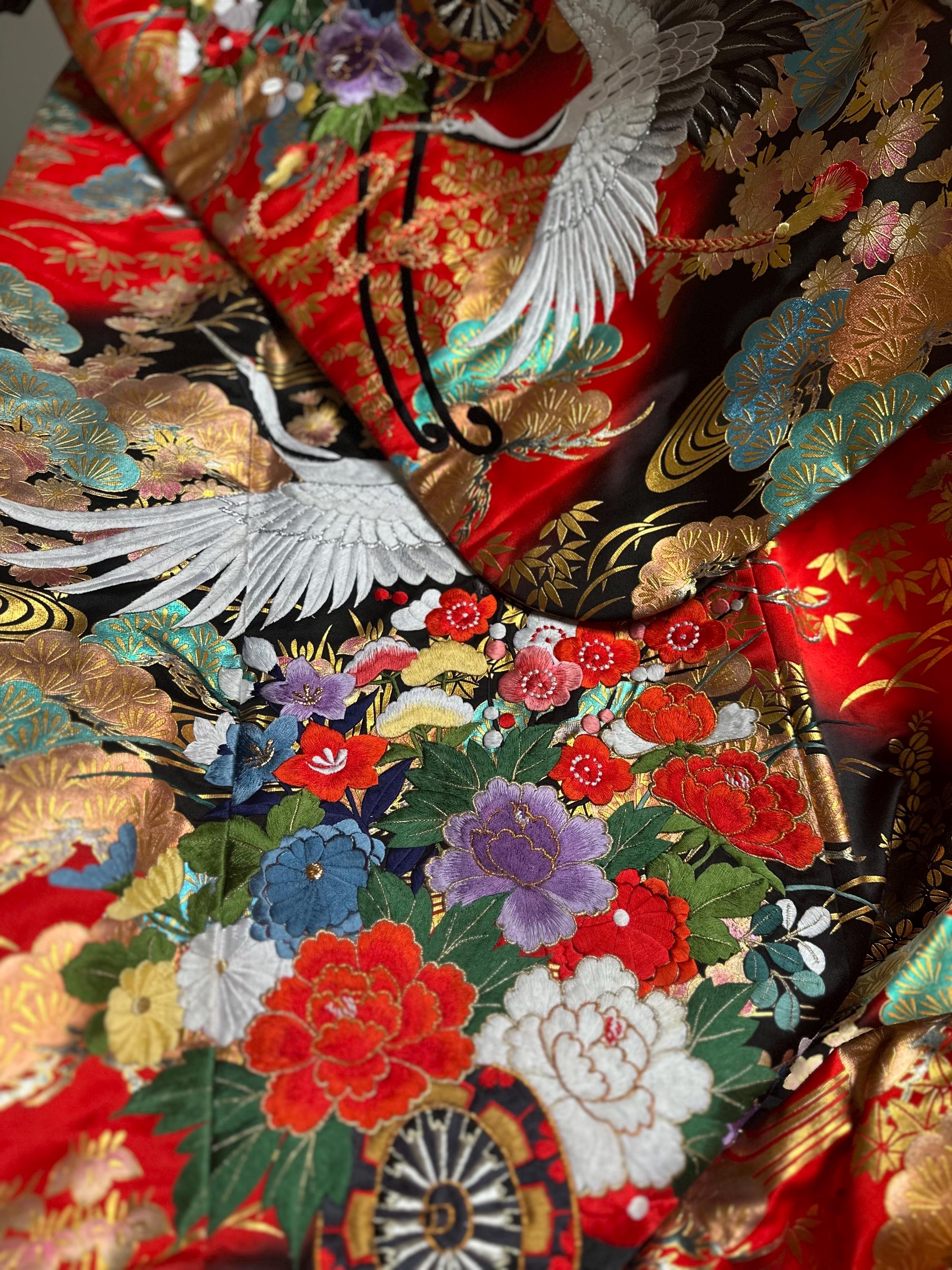
Beyond the base fabric, imperial court garments featured elaborate surface decorations created by master embroiderers who spent years perfecting their techniques. Gold and silver threads were used to create patterns that caught and reflected light, making the wearer appear to glow with divine radiance during torch-lit court ceremonies.
Common motifs included seasonal flowers, birds, geometric patterns derived from Buddhist and Shinto symbolism, and literary references that educated observers would recognize and appreciate. The placement of these decorations followed strict aesthetic principles that balanced visual impact with symbolic meaning.
Seasonal Protocols and Court Ceremonies
The Calendar of Dress
Imperial court life in Kyoto revolved around an elaborate calendar of ceremonies, each requiring specific garments that reflected the season, occasion, and participants’ ranks. Spring ceremonies called for garments in soft colors that evoked cherry blossoms and young leaves, while autumn events demanded the rich golds and deep reds of changing maple leaves.
Court officials maintained detailed records of appropriate dress for each occasion, creating guidelines that ensured every ceremony achieved the proper visual harmony. These protocols weren’t merely practical—they reflected deep philosophical beliefs about the relationship between human society and natural cycles.
Major Court Ceremonies and Their Dress Codes
The most important ceremonies of the imperial year required the most elaborate garments. The New Year celebrations, held in the palace’s main ceremonial halls, brought together hundreds of nobles dressed in their finest court attire, creating a spectacle of color and texture that represented the pinnacle of Japanese aesthetic achievement.
Other significant ceremonies included the seasonal poetry competitions, where participants’ clothing choices reflected their understanding of classical literature and seasonal sensitivity, and the emperor’s birthday celebrations, which required specific color combinations that honored the imperial presence while demonstrating proper hierarchical relationships.
The Economics of Imperial Fashion
Cost and Social Status
The expense of proper court dress in imperial Kyoto was staggering, even for wealthy noble families. A single jūnihitoe could cost the equivalent of a large house, while maintaining the extensive wardrobe required for year-round court participation could bankrupt lesser nobles who aspired to maintain their status.
This economic reality served important social functions, creating barriers that prevented social climbing while ensuring that court fashion remained exclusive to those with genuine aristocratic status. The ability to afford and properly wear court dress became a form of cultural capital that reinforced existing power structures.
Economic Impact on Kyoto
The demand for luxury textiles created by imperial court fashion supported entire industries within Kyoto. Silk production, dyeing workshops, embroidery studios, and specialized accessory makers formed a complex economic ecosystem that employed thousands of artisans and their apprentices.
This concentration of textile expertise in Kyoto laid the foundation for the city’s continued dominance in Japanese luxury goods production, a legacy that continues today in the workshops that create traditional kimonos for modern ceremonies and celebrations.
Symbolism and Cultural Significance
Religious and Philosophical Underpinnings
Imperial court dress in Kyoto wasn’t merely decorative—it embodied deep religious and philosophical concepts that shaped Japanese culture. Buddhist principles of impermanence were reflected in seasonal clothing changes, while Shinto beliefs about purity and spiritual power influenced color choices and purification rituals associated with garment care.
The elaborate nature of court dress also reflected Confucian ideals about hierarchy, propriety, and the visible demonstration of virtue through outward appearance. Every aspect of how nobles dressed communicated their understanding of these philosophical principles and their commitment to upholding the cultural values that legitimized imperial rule.
Literary and Artistic Connections
Court dress served as inspiration for some of Japan’s greatest literary and artistic achievements. The visual beauty of elaborately dressed court ladies inspired poets, painters, and storytellers who created works that are still celebrated today. The connection between fashion and artistic expression became so strong that many courtiers were expected to be accomplished in both dress and literary composition.
The aesthetic principles developed for court dress—such as the subtle gradations of color in kasane combinations and the sophisticated interplay of pattern and texture—influenced other art forms including painting, poetry, and garden design, creating a unified aesthetic vision that defined Japanese culture at its highest levels.
Evolution Through Different Imperial Periods
Kamakura and Muromachi Periods: Adaptation and Change
As political power shifted away from Kyoto during the Kamakura period (1185-1333), court dress adapted to new realities while maintaining its essential character. The rise of the warrior class introduced new influences, but the imperial court continued to uphold traditional dress standards as a way of preserving cultural continuity and legitimacy.
During the Muromachi period (1336-1573), court dress became more simplified but retained its symbolic importance. The aesthetic principles developed during the Heian period continued to influence how nobles dressed, even as practical considerations led to some modifications in construction and decoration.
Edo Period: Preservation and Ritual
The Edo period (1603-1868) saw imperial court dress become increasingly ritualized and preserved. While political power rested with the Tokugawa shogunate, the imperial court maintained traditional dress practices as a way of asserting cultural authority and historical legitimacy.
During this period, court dress became more standardized and codified, with detailed regulations governing every aspect of how different ranks should appear during various ceremonies. This systematization helped preserve traditional techniques and aesthetic principles through a period of significant political and social change.
Technical Aspects of Construction
Traditional Sewing Techniques
The construction of imperial court garments required specialized sewing techniques that had been developed over centuries. Master tailors used methods that created garments capable of displaying their elaborate forms while allowing for the complex movements required during court ceremonies.
The construction of a jūnihitoe involved precise measurements and cutting techniques that ensured each layer would hang properly and create the desired silhouette. The sewing methods used special stitches that were both strong and nearly invisible, maintaining the aesthetic perfection essential for court wear.
Garment Care and Maintenance
Maintaining court dress required specialized knowledge and equipment. Garments were carefully stored in wooden chests with aromatic woods that repelled insects while preserving the delicate fabrics. Regular airing and inspection prevented damage, while specialized cleaning techniques removed stains without damaging precious dyes or metallic threads.
Court households employed specialists whose sole responsibility was caring for these valuable garments. These textile conservators developed techniques that allowed court dress to be preserved for generations, contributing to the remarkable survival of examples that modern scholars can still study.
Modern Legacy and Preservation
Contemporary Kyoto and Traditional Crafts
Modern Kyoto continues to honor its heritage as the center of imperial fashion through workshops and artisans who maintain traditional textile techniques. These contemporary craftspeople create garments for modern ceremonies while preserving the knowledge and skills that made imperial court dress possible.
Visitors to Kyoto can experience this living heritage through museums, traditional craft demonstrations, and specialty shops that offer authentic reproductions of historical garments. This continuation of tradition ensures that the aesthetic principles and technical skills developed for imperial court dress remain part of Japan’s cultural landscape.
Museums and Cultural Preservation
Kyoto’s museums house some of the world’s finest collections of imperial court dress, providing opportunities for modern visitors to appreciate the extraordinary artistry that characterized aristocratic fashion. These institutions work continuously to preserve fragile textiles while making them accessible for study and public appreciation.
The preservation efforts extend beyond simply maintaining physical objects—they include documenting construction techniques, recording oral traditions from master craftspeople, and training new generations of artisans who can continue these traditions into the future.
Photography and Documentation of Traditional Dress
Capturing Imperial Elegance
Professional photography plays a crucial role in documenting and preserving the visual heritage of imperial court dress. Skilled photographers work with museums, cultural institutions, and traditional craftspeople to create images that capture both the overall magnificence and intricate details of these remarkable garments.
Modern digital photography techniques allow for documentation that reveals aspects of court dress invisible to the naked eye, including subtle color variations, construction details, and the effects of age and wear that provide valuable information for historians and conservators.
For those interested in professional photography services that can capture the beauty and cultural significance of traditional Japanese dress and cultural heritage, visit our specialized photography services where we combine technical expertise with deep appreciation for Japan’s artistic traditions.
Visiting Kyoto: Experiencing Imperial Fashion Heritage
Museums and Cultural Sites
Kyoto offers numerous opportunities for visitors to experience the legacy of imperial court dress. The Kyoto National Museum houses rotating exhibitions of court garments, while the Imperial Palace offers guided tours that include discussions of court dress and ceremony.
Traditional craft workshops throughout the city provide hands-on experiences where visitors can learn about silk production, dyeing techniques, and textile arts that continue the traditions established during the imperial period. These experiences offer insight into the skill and dedication required to create garments of such extraordinary beauty and cultural significance.
Cultural Events and Festivals
Throughout the year, Kyoto hosts festivals and cultural events that showcase traditional dress and court ceremonies. The Aoi Matsuri (Hollyhock Festival) features participants dressed in authentic reproductions of court garments, while various temple and shrine ceremonies provide opportunities to see traditional dress in its proper cultural context.
These events offer visitors the chance to witness the living continuation of traditions that began over a thousand years ago, demonstrating how imperial court dress remains relevant to contemporary Japanese cultural identity.
Conclusion: The Eternal Elegance of Imperial Kyoto
The kimono tradition of imperial Kyoto represents one of humanity’s greatest achievements in textile arts and cultural expression. Through centuries of refinement and artistic development, the nobles of Japan’s ancient capital created garments that transcended mere clothing to become embodiments of philosophical principles, artistic vision, and cultural values that continue to inspire and influence modern fashion and design.
The legacy of imperial court dress extends far beyond the walls of Kyoto’s Imperial Palace. The aesthetic principles, technical innovations, and cultural values embedded in these remarkable garments have shaped Japanese identity and continue to influence contemporary fashion, art, and design around the world.
Today, as we walk through Kyoto’s historic districts and visit its temples and museums, we can still feel the presence of the elaborately dressed nobles who once made this city the center of Japanese civilization. Their commitment to beauty, tradition, and cultural refinement created a legacy that enriches our understanding of human creativity and the power of dress to express our highest aspirations.
The story of how Kyoto’s nobility dressed is ultimately a story about the human capacity for creating beauty, meaning, and cultural continuity through the clothes we wear. In every carefully chosen color combination, every precisely placed embroidered motif, and every graceful movement of silk and brocade, we see evidence of a civilization that understood clothing as art, communication, and spiritual expression.
As we continue to appreciate and preserve this remarkable heritage, we ensure that future generations will be able to experience the wonder and beauty that characterized imperial fashion in Japan’s most magnificent city. The kimonos of imperial Kyoto remain not just historical artifacts, but continuing sources of inspiration for anyone who appreciates the intersection of art, culture, and human creativity at its finest.

