
Kyoto Rainy Season Photography: The Ultimate Guide to Capturing Magical Kimono Moments in 2025

Kyoto Rainy Season Photography: The Ultimate Guide to Capturing Magical Kimono Moments in 2025
Discover the enchanting beauty of Kyoto’s tsuyu season and learn how to create stunning kimono photography that captures Japan’s most romantic weather phenomenon.
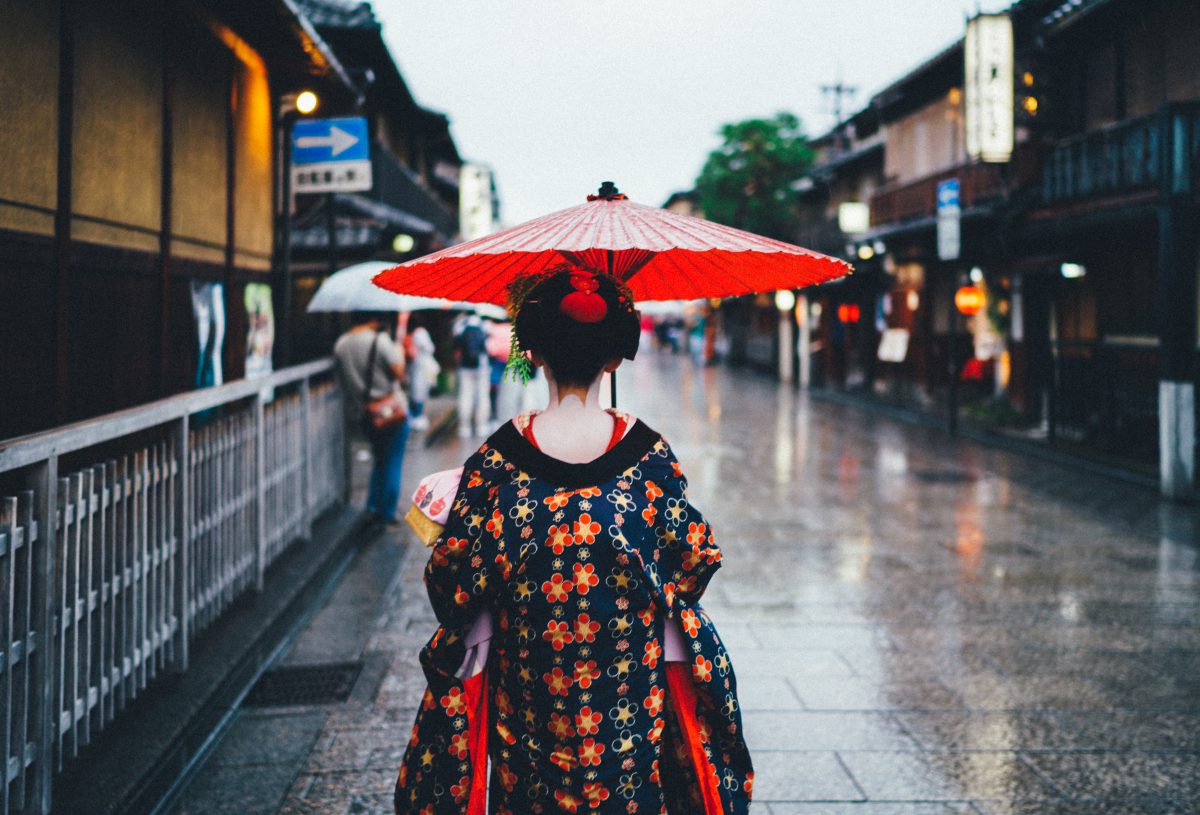
What Makes Kyoto’s Rainy Season Special?
Kyoto’s rainy season, known as tsuyu (梅雨), transforms Japan’s ancient capital into a breathtaking canvas of ethereal beauty. From early June through mid-July, this magical period creates the perfect conditions for capturing some of the most stunning kimono photography in the world.
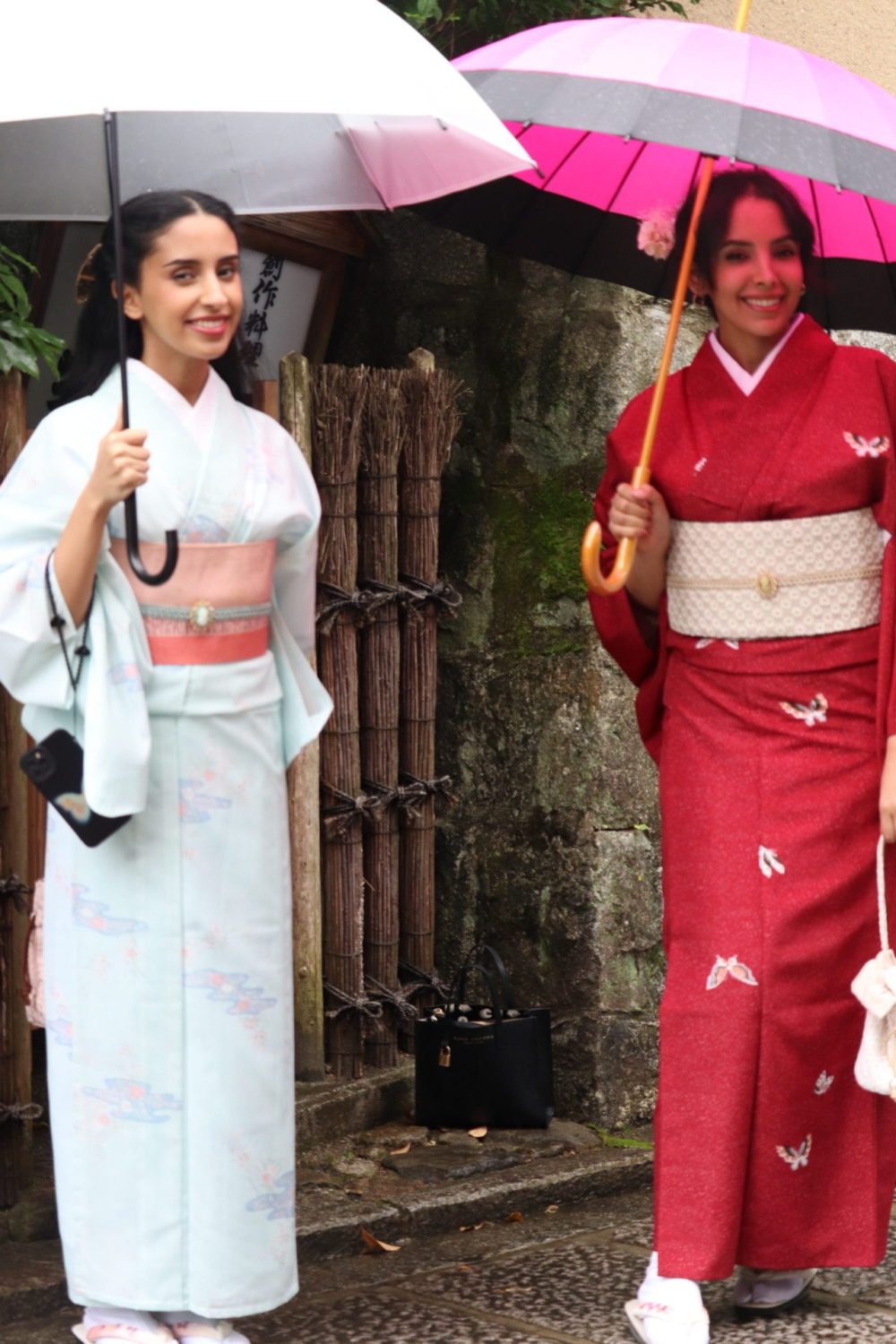
The Science Behind the Beauty
The rainy season occurs when warm, humid air from the Pacific Ocean meets cooler air masses, creating a unique atmospheric phenomenon that blankets Kyoto in gentle mists and intermittent rainfall. This weather pattern produces:
- Diffused natural lighting that eliminates harsh shadows
- Vibrant green landscapes as vegetation reaches peak lushness
- Reflective surfaces that double the visual impact of every scene
- Atmospheric humidity that creates dreamy, soft-focus effects
- Enhanced color saturation in both natural and artificial elements
Why Photographers Love Kyoto’s Rainy Season
Professional photographers and Instagram enthusiasts alike flock to Kyoto during tsuyu for several compelling reasons:
Unique Lighting Conditions: The overcast skies act as a natural softbox, creating even, flattering light that’s perfect for portrait photography. This eliminates the need for complex lighting setups and makes outdoor photography accessible to beginners.
Dramatic Atmosphere: The combination of ancient architecture, traditional dress, and moody weather creates an unparalleled sense of drama and romance in every photograph.
Fewer Crowds: While many tourists avoid the rainy season, savvy photographers know this is when Kyoto reveals its most authentic and peaceful character.
Cultural Authenticity: Rain has deep cultural significance in Japanese aesthetics, representing renewal, contemplation, and the beauty of impermanence (mono no aware).
Best Photography Locations for Rainy Season
Kyoto offers countless photogenic locations that become even more magical during the rainy season. Here are the top spots that every kimono photographer should consider:
1. Kiyomizu-dera Temple Complex

This UNESCO World Heritage site becomes absolutely magical during rainfall. The temple’s wooden architecture contrasts beautifully with the lush green hills, while the elevated position offers sweeping views of rain-soaked Kyoto.
Best Features:
- Iconic wooden balcony overlooking the city
- Traditional architecture that frames kimono subjects perfectly
- Multiple levels offering diverse composition opportunities
- Cherry trees that create natural frames
- Stone pathways that reflect beautifully when wet
Photography Tips:
- Visit early morning (7-8 AM) for fewer crowds
- Use the temple’s columns as natural framing elements
- Capture reflections in the wet stone surfaces
- Include the temple’s traditional rooflines in wide shots
2. Gion District: The Heart of Geisha Culture
Gion’s narrow streets and traditional machiya townhouses create an authentic backdrop that transports viewers to historical Japan. During the rainy season, the district’s lanterns reflect in puddles, creating double exposures that are pure magic.
Must-Visit Spots in Gion:
- Hanami-koji Street: The main thoroughfare with traditional restaurants and tea houses
- Shirakawa Area: Stone-paved streets alongside a picturesque canal
- Pontocho Alley: One of Kyoto’s most atmospheric narrow streets
- Yasaka Shrine: Beautiful vermillion gates and traditional architecture
Insider Secrets:
- Early evening (5-6 PM) offers the best lighting with traditional lanterns
- Respect local customs and ask permission before photographing people
- The sound of rain on traditional roofs adds authentic atmosphere
- Look for traditional umbrellas (wagasa) displayed outside shops
3. Arashiyama Bamboo Grove
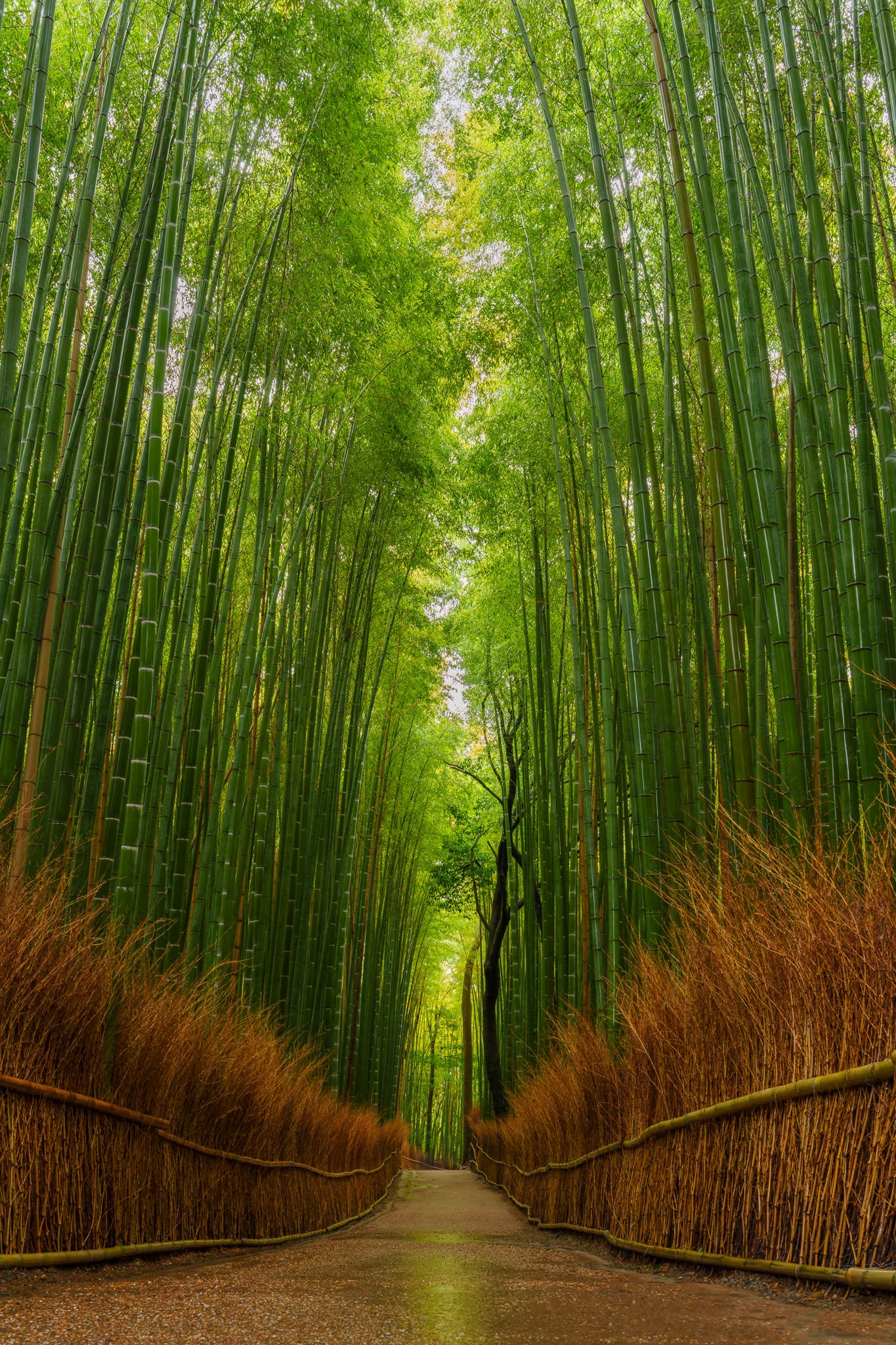
The towering bamboo creates a natural cathedral that’s enhanced by the gentle patter of rain on leaves. This location offers a completely different aesthetic from temple settings, with vertical lines and filtered green light.
What Makes It Special:
- Natural sound dampening creates a peaceful atmosphere
- Filtered light through bamboo creates ethereal effects
- Wet bamboo has a distinctive shine that photographs beautifully
- The path naturally leads the eye through compositions
- Rain creates interesting patterns on the ground
Best Practices:
- Visit during weekday mornings for solitude
- Use the bamboo’s natural lines to create leading lines
- Experiment with both wide-angle and telephoto lenses
- Include the gravel path for texture and leading lines
4. Fushimi Inari Shrine’s Thousand Torii Gates
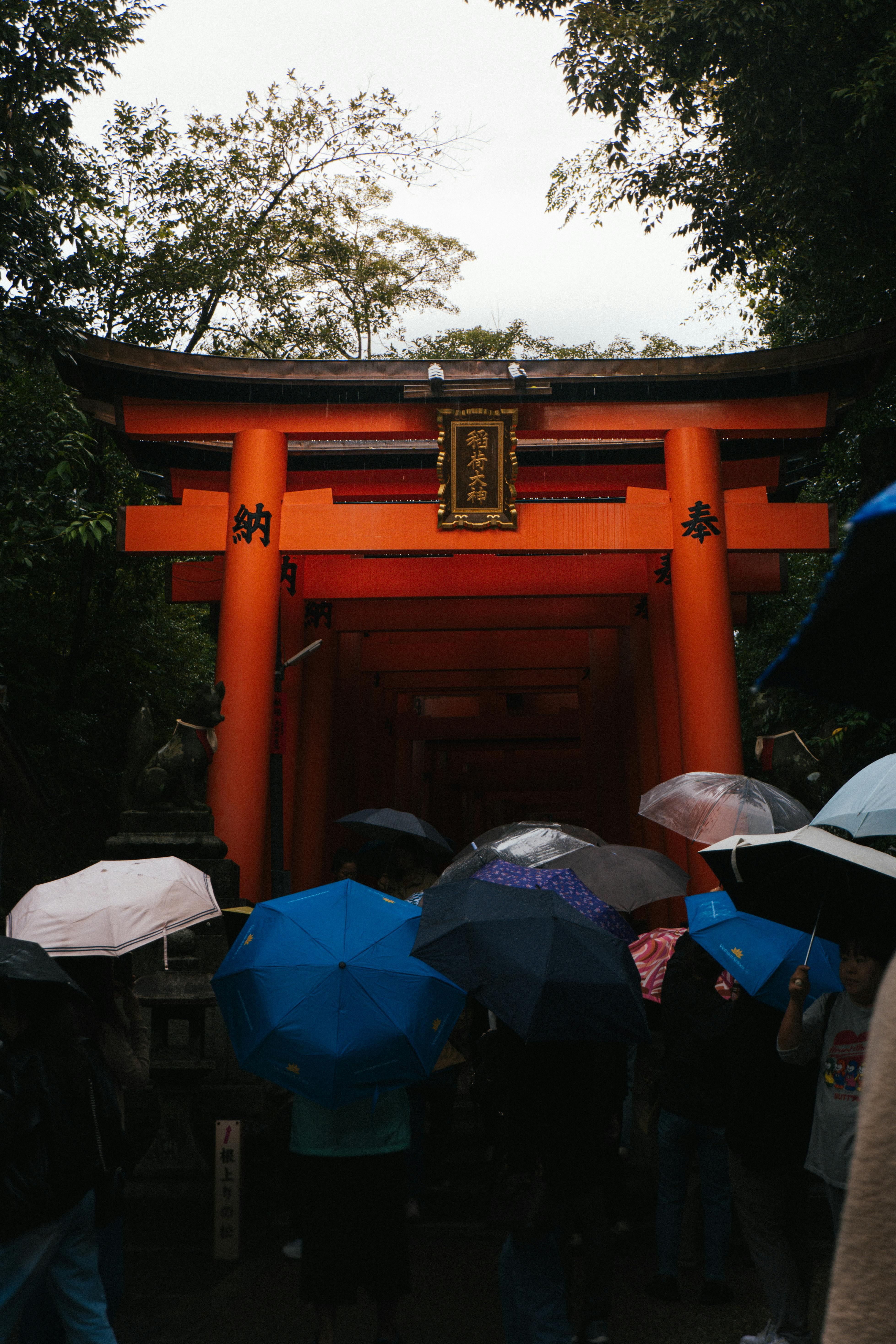
The bright orange torii gates create stunning contrasts against gray rainy skies and green moss. This location offers endless composition possibilities with its tunnels of gates leading up the mountain.
Unique Rain Photography Opportunities:
- Water droplets on vermillion paint create texture
- Moss-covered stone lanterns add authentic detail
- The tunnel effect is enhanced by atmospheric conditions
- Reflections in wet stone steps create depth
- Traditional architecture complements kimono colors perfectly
5. Philosopher’s Path (Tetsugaku-no-michi)
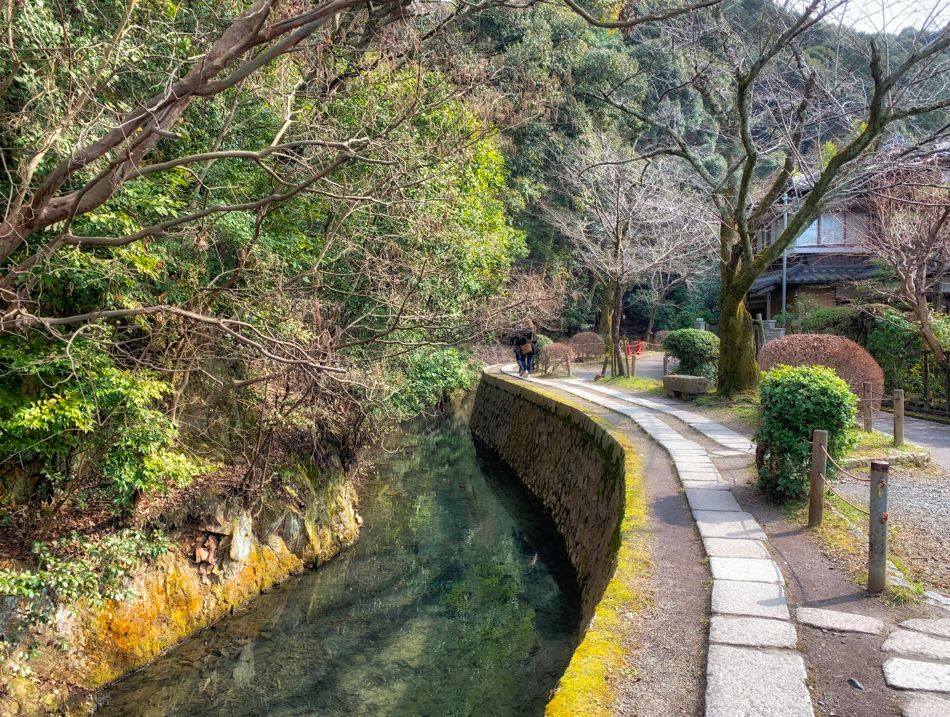
This peaceful walking path along a canal becomes a photographer’s dream during cherry blossom season and rainy weather. The path connects several temples and offers continuously changing scenery.
Key Features:
- Canal reflections double every composition
- Overhanging trees create natural canopies
- Stone bridges provide elevated shooting positions
- Traditional houses line the path
- Wildlife (especially during quieter rainy periods) adds life to photos
Kimono and Wagasa: The Perfect Rainy Day Combination
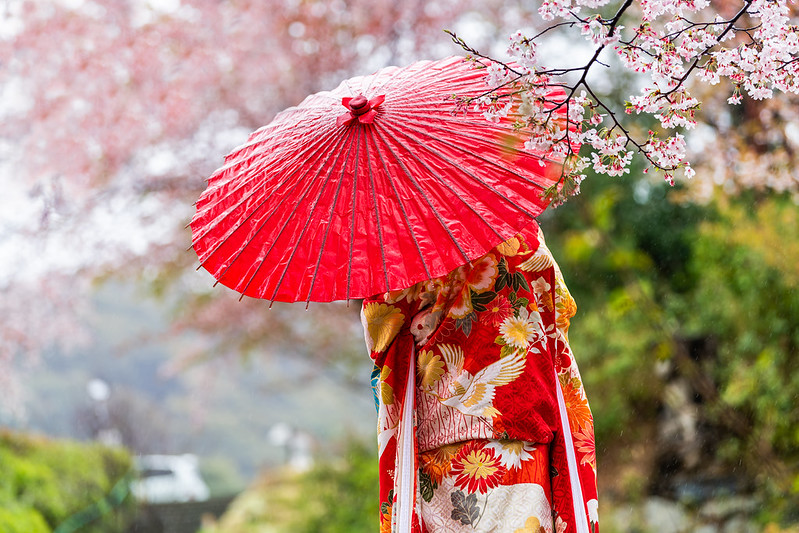
The combination of traditional kimono and wagasa (traditional Japanese umbrellas) creates photography that’s both culturally authentic and visually stunning. Understanding these elements is crucial for creating compelling rainy season imagery.
Understanding Kimono in Rain Photography
Seasonal Appropriateness: During tsuyu, lighter fabrics and cooler colors are traditionally preferred. Look for:
- Silk kimono with water-resistant treatments
- Pastel colors that complement the muted rainy atmosphere
- Floral patterns that echo the season’s abundant greenery
- Geometric designs that create visual interest against organic backgrounds
Color Psychology in Rain Photography:
- Deep blues and purples create dramatic contrasts against gray skies
- Soft pinks and whites maintain elegance while standing out
- Traditional indigo complements wet stone and wood
- Bright accent colors in obi (sash) add focal points
The Art of Wagasa: Traditional Japanese Umbrellas
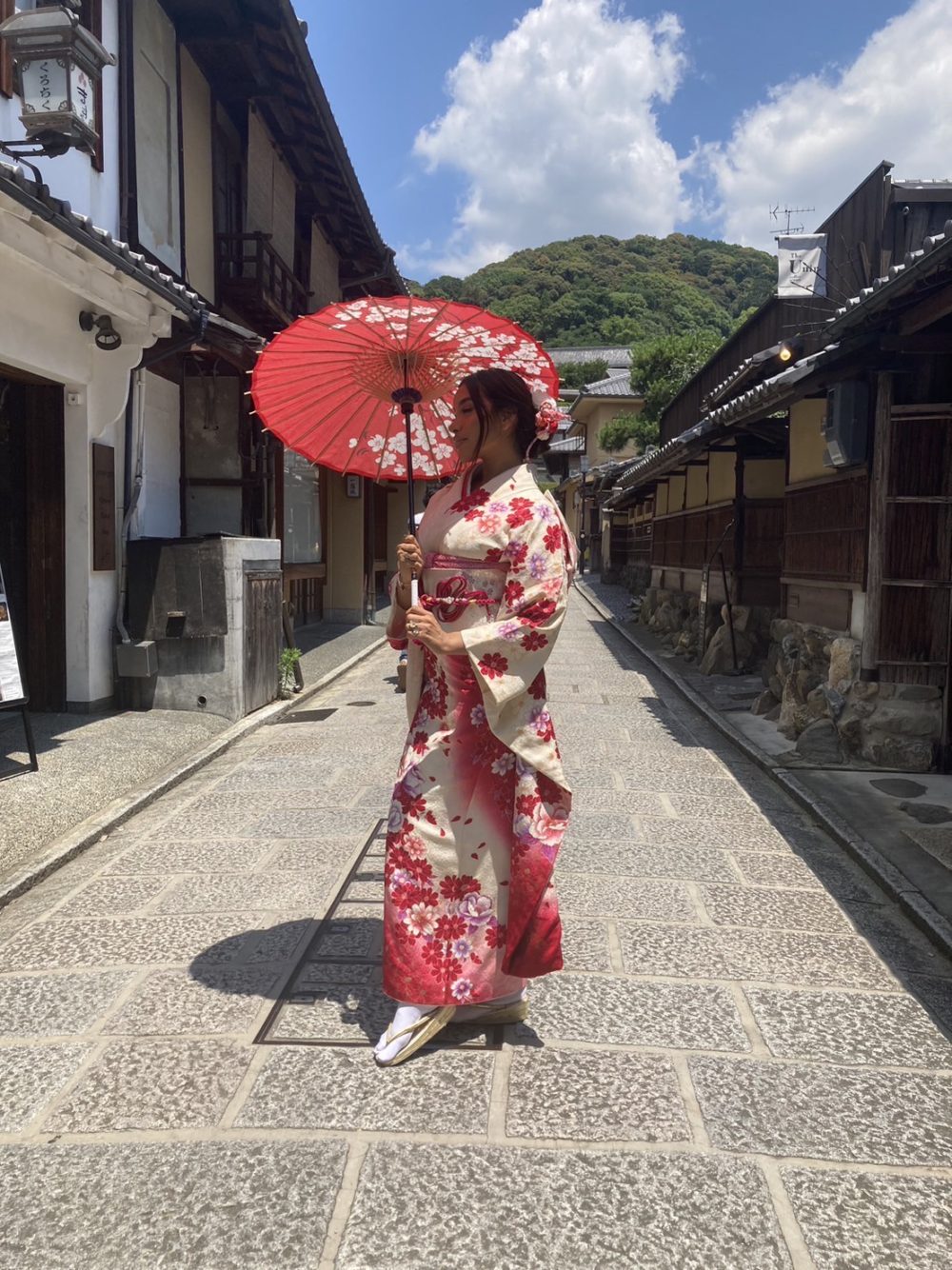
Wagasa aren’t just functional items—they’re works of art that add cultural depth and visual interest to every photograph.
Construction and Aesthetics:
- Bamboo ribs create beautiful geometric patterns
- Washi paper canopies feature traditional designs
- Handcrafted details add authenticity to modern photography
- Color coordination with kimono creates harmonious compositions
Photographic Advantages:
- Natural framing device for portraits
- Pop of color against neutral backgrounds
- Cultural symbolism that adds story to images
- Practical protection allowing longer shooting sessions
Styling Tips for Kimono Rain Photography
Accessories That Enhance Photography:
- Traditional wooden geta (elevated sandals) for authentic footwear
- Decorative hair ornaments that complement the kimono
- Small traditional bags (kinchaku) for practical storage
- Subtle makeup that photographs well in natural light
Pose and Movement Ideas:
- Walking poses that show the kimono’s flowing lines
- Umbrella positioning that creates interesting shadows
- Interaction with environment (touching water, looking at reflections)
- Group compositions for multiple subjects
Complete Guide to Kimono Rental in Kyoto
Renting a kimono in Kyoto has become increasingly popular, with numerous shops offering everything from basic rentals to luxury packages. Here’s your complete guide to making the right choice.
Top Kimono Rental Recommendation
For the ultimate kimono rental experience in Kyoto, we highly recommend MK Mimosa (https://mk-mimosa-e.top/), a premium rental service that specializes in high-quality kimono and authentic accessories perfect for rainy season photography.
Why Choose MK Mimosa:
- Premium fabric selection including water-resistant options
- Professional styling services to ensure authentic appearance
- Wagasa umbrellas included in photography packages
- Flexible rental periods accommodating full-day shoots
- Expert advice on locations and timing
- Professional photography partnerships available
What to Expect from Kimono Rental Services
Standard Rental Packages Include:
- Kimono selection from various styles and colors
- Obi (sash) coordination with matching accessories
- Undergarments and padding for proper fit
- Professional dressing service ensuring authentic appearance
- Hair styling (additional fee at some locations)
- Basic accessories including bags and hair ornaments
Premium Packages Often Add:
- Higher-quality fabrics including silk and designer options
- Additional accessories such as fans, jewelry, and premium bags
- Photography coordination with recommended photographers
- Weather protection including umbrellas and rain covers
- Extended rental periods for full-day experiences
Professional Photography Tips for Rainy Weather
Capturing stunning kimono photography during Kyoto’s rainy season requires specific techniques and considerations. Here are professional tips to help you create magazine-quality images.

Camera Settings for Rainy Weather
Optimal Camera Settings:
- Aperture: f/2.8 to f/5.6 for shallow depth of field
- ISO: 400-1600 depending on available light
- Shutter Speed: 1/60s or faster to avoid motion blur
- Focus Mode: Single-point autofocus for precision
- Metering: Spot metering for challenging lighting
White Balance Considerations:
- Daylight setting for overcast conditions
- Custom white balance for mixed lighting situations
- RAW format for maximum post-processing flexibility
- Exposure compensation of +0.3 to +0.7 stops for proper skin tones
Composition Techniques for Rainy Scenes
Using Rain as a Compositional Element:
- Reflections in puddles create natural mirror effects
- Rain droplets on surfaces add texture and detail
- Mist and fog create atmospheric depth
- Wet surfaces enhance color saturation
- Dramatic skies provide compelling backgrounds
Framing and Perspective:
- Low angles emphasize reflections and foreground elements
- High angles show patterns in wet surfaces
- Wide shots capture the full atmospheric effect
- Close-ups highlight fabric textures and rain details
- Dutch angles add dynamic energy to compositions
Equipment Protection and Maintenance
Essential Weather Protection:
- Lens hoods to prevent water spots on front elements
- Microfiber cloths for quick cleaning
- Plastic bags for emergency camera protection
- Umbrella holders for hands-free operation
- Weather-resistant camera bags for transport
When to Visit: Timing Your Kyoto Rainy Season Trip
Perfect timing can make the difference between good and extraordinary kimono photography during Kyoto’s rainy season.
Understanding Tsuyu Season Patterns
Early Season (Early June):
- Light, intermittent rain perfect for beginners
- Moderate temperatures comfortable for extended shoots
- Peak green foliage as vegetation responds to moisture
- Fewer tourists as summer vacation hasn’t begun
Mid-Season (Mid-June to Early July):
- Consistent atmospheric conditions ideal for planning
- Optimal humidity for that ethereal misty look
- Established rainfall patterns easier to predict
- Full seasonal transformation of landscapes
Late Season (Mid-July):
- Dramatic weather changes offering variety
- Clearing skies providing contrast opportunities
- Summer festival preparation adding cultural elements
- End-of-season deals on rentals and services
Daily Timing Strategies
Golden Hour Adaptations:
- Early morning (6-8 AM): Softer light, fewer crowds, fresh rain effects
- Late afternoon (4-6 PM): Dramatic lighting, lantern illumination beginning
- Evening (6-8 PM): Traditional lighting, atmospheric conditions
- Night photography: Neon reflections, urban rain effects
Essential Preparation for Rainy Season Photography
Proper preparation ensures your kimono photography session is both successful and enjoyable, regardless of weather conditions.
Pre-Shoot Planning
Location Scouting:
- Visit locations beforehand to understand lighting and logistics
- Identify covered areas for equipment protection and subject comfort
- Note unique rain effects specific to each location
- Plan route efficiency to maximize shooting time
- Establish backup locations in case of severe weather
Weather Monitoring:
- Daily forecast checking for optimal shooting windows
- Radar monitoring for precipitation timing
- Temperature considerations for subject comfort
- Wind speed awareness for umbrella stability
- Humidity levels for equipment protection
Subject Preparation
Kimono Weather Adaptations:
- Water-resistant fabrics when possible
- Proper undergarments for comfort and protection
- Appropriate footwear with good traction
- Hair protection against humidity
- Makeup longevity considerations
Cultural Significance of Rain in Japanese Aesthetics
Understanding the cultural context of rain in Japanese art and philosophy will deepen your appreciation and improve your photography during Kyoto’s rainy season.
Historical Perspectives on Rain
Traditional Japanese Art: Rain has been a central theme in Japanese artistic expression for centuries. From ancient scroll paintings to contemporary anime, precipitation represents renewal, melancholy, and the beauty of transience.
Literary Connections:
- Haiku poetry frequently celebrates rain’s subtle beauty
- Classical literature uses rain as metaphor for emotion
- Seasonal awareness (seasonal sensitivity) includes rain appreciation
- Mono no aware (awareness of impermanence) often associated with rain
Rain in Japanese Philosophy
Wabi-Sabi Aesthetics: The Japanese concept of finding beauty in imperfection and transience is perfectly embodied by rainy weather photography. The impermanent nature of rain effects, the way it transforms familiar scenes, and the acceptance of less-than-perfect conditions all reflect wabi-sabi principles.
Zen Buddhism Influence:
- Mindfulness in appreciating present weather conditions
- Acceptance of natural circumstances beyond our control
- Simplicity in finding beauty in everyday rain
- Contemplation encouraged by rain’s meditative qualities
Modern Cultural Applications
Contemporary Photography: Understanding these cultural foundations helps photographers create more meaningful images that resonate with both Japanese and international audiences.
Tourist Experience: Visitors who embrace rain rather than merely endure it often have more authentic and memorable experiences in Kyoto.
Conclusion: Embracing Kyoto’s Rainy Season Magic
Kyoto’s rainy season offers photographers and cultural enthusiasts a unique opportunity to experience Japan’s ancient capital in its most atmospheric and romantic state. The combination of traditional kimono, authentic wagasa umbrellas, and the city’s stunning historical architecture creates photography opportunities that are truly once-in-a-lifetime.
By understanding the cultural significance of rain in Japanese aesthetics, timing your visit properly, and preparing adequately for weather conditions, you can create images that capture not just the visual beauty of Kyoto, but also its spiritual essence.
Whether you’re a professional photographer, an Instagram enthusiast, or simply someone who appreciates cultural beauty, Kyoto’s rainy season provides an unforgettable backdrop for creating lasting memories. The key is to embrace the weather as part of the experience, rather than seeing it as an obstacle to overcome.
Remember that the best kimono photography happens when you’re comfortable, prepared, and open to the unexpected moments that rain can create. From the gentle mist that softens ancient temple edges to the dramatic reflections in wet stone pathways, every aspect of Kyoto’s rainy season contributes to creating images that are both beautiful and culturally authentic.
So pack your camera, book your kimono rental at MK Mimosa, and prepare to discover why Kyoto’s rainy season is considered one of the most magical times to experience Japan’s cultural heart.

