
Instagrammable Kyoto: Kimono Photos Worth Planning Your Trip For
Kyoto has a way of slowing everything down. Even in the middle of a busy travel schedule, the moment you slip into a kimono and step onto a narrow street, the pace changes. Footsteps soften. Movements become a little more deliberate. That shift alone is what makes kimono photos in Kyoto feel different from anywhere else.
The city works beautifully as a backdrop because it doesn’t try too hard. Wooden townhouses, stone paths, faded shop curtains, and tiled roofs have been part of everyday life here for centuries. When a kimono enters that scene, it doesn’t look staged. It looks like it belongs. That natural harmony is what turns an ordinary photo into something quietly striking.
Not every photo-friendly place is automatically “Instagrammable,” though. In Kyoto, the most memorable kimono photos usually come from spots where three elements line up: texture, depth, and atmosphere. Texture comes from details like wood grain, lantern paper, mossy stone, or woven bamboo fences. Depth appears when streets curve gently, steps rise at a slope, or torii gates repeat into the distance. Atmosphere is harder to define, but you feel it instantly—the hush of a temple approach, the echo of footsteps in the early morning, the way light filters between buildings.
Timing plays a big role as well. Early mornings in Kyoto often feel almost private, especially in well-known areas. The light is softer, shadows stretch longer, and the city feels more like a living place than a tourist destination. Late afternoons can work just as well, when warm light reflects off wooden walls and the colors of a kimono start to glow rather than pop too sharply.
What many travelers don’t expect is how small moments often create the best photos. Adjusting a sleeve while standing still. Looking down while walking uphill. Pausing near a shop entrance as a noren curtain moves slightly in the breeze. These aren’t dramatic poses, but they photograph beautifully in Kyoto’s streetscape.
Kyoto rewards patience. When you slow down, look around, and let the surroundings guide you, the photos tend to take care of themselves. That’s the real secret behind Instagrammable kimono photos here.
The Most Instagrammable Kimono Photo Spots in Kyoto
Gion: Classic streets and timeless atmosphere
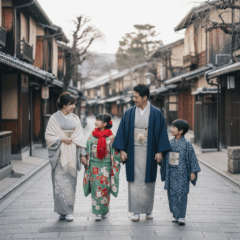
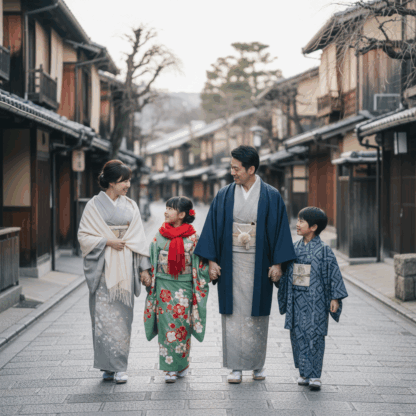
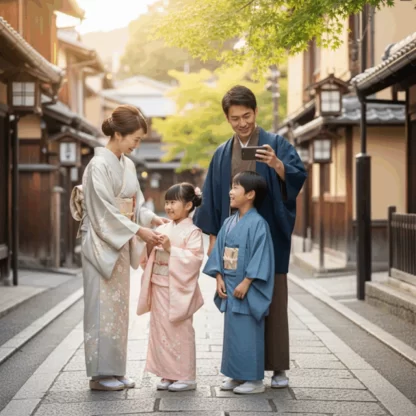
Gion is often the first place that comes to mind, and for good reason. The streets here feel composed even when you’re not trying. Wooden facades line up neatly, lattice windows repeat their patterns, and stone pavement reflects light in a soft, muted way. When wearing a kimono, even a simple walk down Hanamikoji or a quieter side street nearby creates a scene that feels balanced.
Early morning works best, when shop shutters are still closed and the air feels calm. The kimono doesn’t compete with the background here. It blends in.
Arashiyama: Nature, bamboo, and seasonal beauty
Arashiyama offers a completely different kind of beauty. Nature takes the lead. The bamboo grove is famous, but smaller paths just outside it often feel more photogenic. Sunlight filters down unevenly, creating highlights and shadows that move as you walk.
A kimono photographed here tends to feel lighter, more fluid. Long sleeves catch the breeze, colors shift depending on the light, and the surrounding green softens everything. River paths and bridges nearby also work beautifully, especially when the water reflects the sky.
Fushimi Inari: Torii gates and dynamic compositions
Fushimi Inari brings a sense of rhythm to photos. Rows of torii gates create depth automatically, which is rare in busy cities. The repetition pulls the eye forward, making even simple poses feel dynamic.
A kimono’s pattern becomes part of that rhythm rather than the main focus. Midday crowds can be heavy, but once you walk a little farther up the mountain, spaces open up. The atmosphere changes too. Quieter, more grounded, almost meditative.
Higashiyama: Slopes, temples, and hidden corners
Higashiyama ties everything together. Sloped streets, old staircases, temples tucked between houses. Walking uphill in a kimono naturally slows your movement, which often leads to more natural-looking photos.
Looking back over your shoulder. Pausing near stone walls. Standing still while people pass by in the distance. This area works especially well in late afternoon, when light wraps around buildings instead of hitting them directly.
One thing these places share is that they don’t need much direction. You don’t have to hunt for a “perfect spot.” Kyoto’s most Instagrammable kimono photos usually happen while moving between places, not standing in front of them.
How to Take Better Kimono Photos in Kyoto
Best time of day for soft, flattering light
Light is the quiet hero of kimono photos. In Kyoto, it changes the mood more than any filter ever could. Early morning light tends to be soft and low, sliding across streets instead of falling straight down. That’s when colors look calm and skin tones feel natural.
Late afternoon brings a different kind of warmth. Wooden walls catch the sun and glow gently, and shadows add depth instead of distraction. Midday light can be harsh, so shaded streets, gates, or covered walkways become your best friends.
Angles, poses, and small details that stand out
Posing doesn’t need to be complicated. Walking slowly instead of standing still. Holding a sleeve lightly. Turning your head just a little instead of facing the camera straight on. These small movements feel natural in a kimono and help avoid stiff, costume-like photos.
Details matter more than people expect. The edge of a sleeve, the pattern of an obi, the curve of a collar. Framing shots that include these elements alongside Kyoto’s textures—stone, wood, paper—creates photos that feel intimate rather than posed.
Respectful photo etiquette in busy areas
There’s also an unspoken etiquette that makes photography smoother. Avoid blocking narrow streets. Step aside if people are passing through. At temples and shrines, follow posted signs and be mindful of quiet areas.
Respect tends to show in photos too. When you’re not rushing or forcing a shot, the atmosphere stays calm, and that calm comes through in the images.
Choosing the Right Kimono for Instagram Photos
Colors and patterns that photograph beautifully
Color choice changes everything in photos. In Kyoto, backgrounds tend to be earthy—wood, stone, greenery, muted walls—so kimono colors that either softly contrast or gently echo those tones photograph best. Deep reds, indigo blues, forest green, and warm neutrals often feel timeless.
Patterns matter just as much. Large patterns work well in wide shots, while smaller details shine in close-ups. In crowded streets, simpler designs often keep photos from feeling visually busy.
Matching kimono styles with Kyoto locations
In Gion and Higashiyama, classic colors and traditional patterns blend naturally with the historic streets. In greener areas like Arashiyama, lighter tones or softer palettes often feel more at home.
It’s less about rules and more about balance—letting the kimono and the scenery share the frame.
Hair, accessories, and finishing touches
Simple hairstyles tend to photograph better than overly elaborate ones, especially when walking or shooting from different angles. Small hair accessories catch the light without overpowering the look.
Comfort matters too. When a kimono fits well, posture relaxes and movements look smoother. That ease shows in photos, even if you don’t notice it in the moment.
Frequently Asked Questions About Kimono Photos in Kyoto
【Q】Do I need professional photography to get good photos?
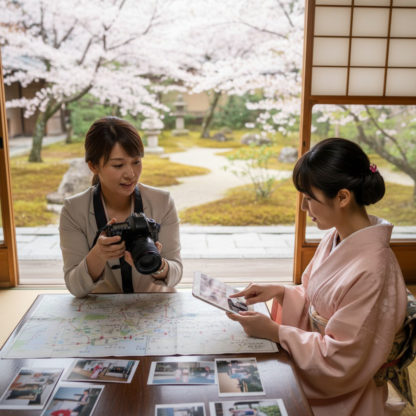
【A】No. Many travelers take beautiful kimono photos using a smartphone. Light, timing, and pace matter more than equipment. Professional photographers are helpful if you want polished portraits or prefer guidance.
【Q】Can I take kimono photos even on a busy day?
【A】Yes. On crowded days, focus on closer shots, details, or quieter side streets. Early mornings are still the easiest way to avoid crowds.
【Q】What if it rains?
【A】Rain can add atmosphere. Wet stone streets, reflections, and umbrellas often create memorable photos, especially in covered walkways or narrow alleys.
【Q】How long does a kimono photo experience usually take?
【A】Many people spend two to four hours taking photos while sightseeing. Others enjoy a full-day experience. There’s no fixed rule.
【Q】Is photography allowed at temples and shrines?
【A】Rules vary. Some areas restrict photography, especially indoors or sacred spaces. Always follow posted signs and staff guidance.
What Travelers Say About Kimono Photo Experiences in Kyoto
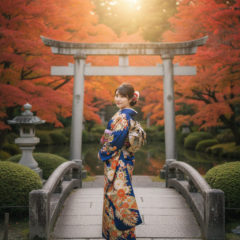
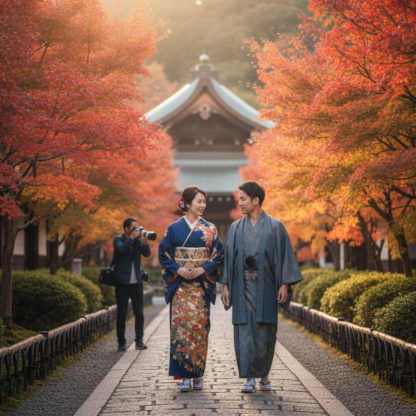
Many travelers say kimono photos become one of the most memorable parts of their Kyoto trip. Spring visitors often mention how soft colors pair beautifully with cherry blossoms. Autumn travelers love how deeper kimono tones stand out against red and gold leaves.
Some people say wearing a kimono made them slow down and notice details they would have rushed past otherwise. The photos last, but the experience behind them tends to stay just as vivid.
Ready to Capture Your Own Instagrammable Kyoto Moments
Planning one day around kimono photos can shape the rest of your Kyoto trip in a good way. Choosing a calm morning, picking areas that match your pace, and leaving space to wander keeps the experience relaxed.
When it feels right, that’s a good time to check kimono rental options and availability. Even browsing styles and schedules ahead of time helps you picture how the day might unfold.
Sometimes, that small bit of preparation is all it takes to turn a simple Kyoto stroll into photos you’ll want to come back to again and again.